Why Hairless Cat Breeds Often Suck on Their Own Tails
Published: 2025. 10. 20. 07:30 -
- Photos: Getty Images Hungary • 3 minutes readingPublished: 2025. 10. 20. 07:30 -
- Photos: Getty Images Hungary • 3 minutes reading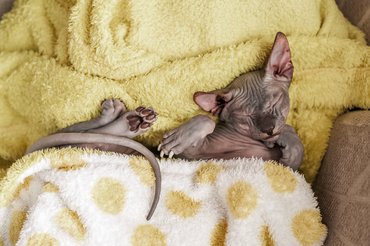
 Set WeloveCatz to appear first in Google search results!
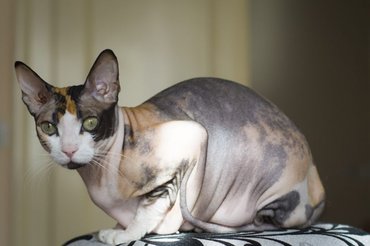
While scrolling through Instagram, we came across a rather bizarre video, which you can see below. The Sphynx cat is deeply engaged in sucking on their own tail, and when the owner pulls it out of their mouth, the tail is revealed to be red, coloured by the iron and haemoglobin content of the saliva. It also becomes clear that the cat was holding almost half of their tail in their mouth.

Reading through the comments, it quickly became apparent that this is not an isolated phenomenon, this behaviour is quite common among hairless cat breeds, especially Sphynxes. The following explains why cats suck on their tails and what can be done about it.
We searched for relevant information about the topic online and found a useful discussion on a Sphynx forum. There, it was explained that hairless cats, especially Sphynxes, tend to be extremely “oral.” There can be several reasons behind sucking their own tail or other objects in their environment.
One of the most common reasons for this behaviour is self-soothing, much like thumb-sucking or using a dummy in children. In such cases, the cat does not cause themself pain, and you may observe this behaviour when there’s some kind of change in their daily life — though it can also occur as part of their normal routine. The goal, in every case, is relaxation and comfort.
This behaviour can also appear when the cat has mental health issues. In such cases, pica often develops – a condition where the animal compulsively sucks or chews on inedible objects. For these cats, it doesn’t matter whether the owner reacts to it or not – they continue sucking and chewing regardless. In such cases, other symptoms may also appear alongside tail-sucking, such as increased aggression, mood swings, or abnormal elimination behaviour.
One owner explained that in their cat’s case, everything went smoothly after birth, they were well-socialised and raised in an excellent environment. However, the breeder had noted that even then, the kitten preferred their own company and was less interested in interacting with littermates. What exactly causes this condition and what the true early signs might be is still unknown, but one thing is certain: it’s a real and observable phenomenon.
@tiktok_just_stuff cat suckling on it tail follow for more like this 🫡 #share #videovirall #4upage #sharethis #fyp #funnymoments #fypyoutube#cat #pets #petsoftiktok #shorts #virall #highlights #fypシ゚viral #fyp #animalsoftiktok #animals #funnymoments ♬ original sound - JUST STUFF 🤷♂️
According to cat owners’ experiences, it’s rarely possible to completely eliminate tail-sucking, but redirecting attention and engaging in play can reduce both its intensity and frequency. The more interactive playtime you provide, the less opportunity your cat has to occupy themself with their tail. This also enriches their environment and daily life, which can reduce stress, anxiety, and boredom.
It’s important to note that this habit is not a major problem as long as the cat isn’t harming themself. However, if the behaviour bothers you or you feel and/or notice that your cat isn’t living a full life, we strongly recommend taking them to a vet, who may then refer you to a specialist.
Follow us!
facebook instagram
Related articles
7 Reasons Why Cats Arch Their Backs
Life • 4 minutes
How to cut your cat's claws safely
Care • 3 minutes