A Cat Has Died of Bird Flu: These Symptoms Are a Warning
Published: 2026. 01. 05. 07:30 -
- Photos: Getty Images Hungary • 4 minutes readingPublished: 2026. 01. 05. 07:30 -
- Photos: Getty Images Hungary • 4 minutes reading
 Set WeloveCatz to appear first in Google search results!
Bird flu, despite its name, is not only dangerous for birds. The following case proves that we must protect cats from it as well.

According to the latest news, near Neuruppin in Germany they found the body of a cat in which official tests detected the H5N1 virus, better known as bird flu. In the area, several wild birds also died as a result of the disease. Since there have already been cases in Hungary where cats were affected by the illness, it is worth going through the symptoms, and also touching on the ways of prevention.
In Hungary as well, bird flu causes enormous damage year after year. Based on the information of the National Food Chain Safety Office (NÉBIH) from 5 December, “from 1 September 2025 up to the present day in Europe, experts have detected the highly pathogenic avian influenza virus in a total of 427 poultry farms, 71 facilities keeping captive birds, and 3,813 wild birds.” Among the affected countries, besides the mentioned Germany, are several neighbouring countries, as well as Hungary. (The full list of countries affected by bird flu can be accessed here.) Besides poultry and wild birds, we must also pay attention to our pets, as bird flu is dangerous to cats and other animals, including dogs.
As we wrote, in the case of cats the disease can cause a serious condition, but is it dangerous to humans? We also get an answer to this from the NÉBIH information sheet, according to which “due to the variability of the influenza virus pathogen, a variant of the virus may develop that is capable of infecting humans. In Europe, however, the chance of this is low because of animal-keeping practices that avoid close contact with animals and the consumption habits related to poultry products.” By the latter, heat treatment is meant.
The likelihood that your cat would infect you is very low, but according to the official position this possibility requires further investigation. Human-to-human transmission is also not typical, but it is not excluded. Fortunately, human cases are mostly mild in their course.
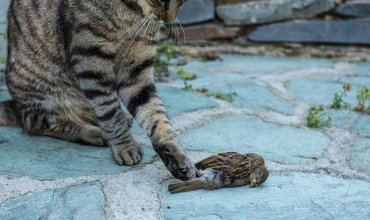
The last sentence is especially important for protecting our pets, since bird flu is primarily transmitted through contact with sick birds and through the consumption of their raw meat. Because of this, the probability of illness is lower in dogs, while free-roaming or outdoor cats may “procure” their own food through hunting – including potentially infected birds. (Poultry meat available in commercial circulation is strictly controlled, so if your dog or cat also receives raw meat from you, the chance of infection is minimal; however, in the case of backyard, uncontrolled meat products it is possible – precisely for this reason experts also emphasise the importance of heat treatment.)
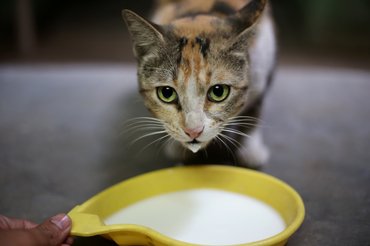
As previously reported, in December 2024 raw pet food caused an outbreak in America, and through cattle and goats – which can also become ill –
raw milk products can also be sources of infection.
In addition, attention must be paid to hygiene, as the droppings of sick birds are also infectious, so they can even enter your home on the soles of your shoes. Because of this, it is worth taking off footwear already before the door or in the hallway, and if you consider it justified (for example, if you have been in a forest, in a bird-dense area, or on a farm), also disinfecting the soles. Washing hands with soap is also essential, as in the prevention of all diseases.
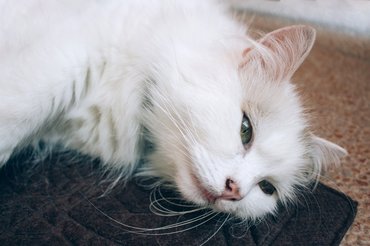
In addition to general symptoms such as lethargy, weakness, fever, and loss of appetite, severe eye and nasal discharge, coughing, sneezing, difficulty breathing, as well as neurological symptoms (trembling, seizures, coordination disorders) may appear.
If your pet appears ill and the listed symptoms appear in them (not necessarily all of them), then visit your veterinarian for examination. Treatment is usually symptomatic.
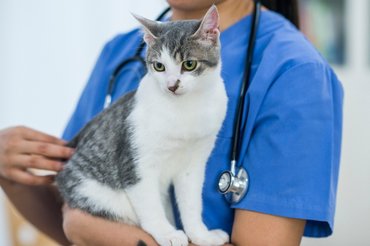
There is a vaccine against bird flu; your veterinarian can provide information about this. Furthermore, experts recommend avoiding feeding the cat raw meat and raw milk or dairy products (which are basically not recommended anyway in the case of lactose-sensitive cats), and preventing the animal from coming into contact with wild birds.
Follow us!
facebook instagram
Related articles

7 Reasons Why Cats Arch Their Backs
Life • 4 minutes
How to cut your cat's claws safely
Care • 3 minutes