This Is How Cat Saliva Can Become Deadly: Even a Small Scratch Can Be Dangerous
Published: 2026. 03. 02. 07:30 -
- Photos: Getty Images Hungary • 3 minutes readingPublished: 2026. 03. 02. 07:30 -
- Photos: Getty Images Hungary • 3 minutes reading
 Set WeloveCatz to appear first in Google search results!
In certain cases, a single scratch or bite can trigger a severe, even life-threatening condition. But what makes your cat’s saliva potentially deadly, and who is most at risk of infection?

Have you ever heard of Capnocytophaga? If not, that’s no coincidence. This bacterium very rarely infects humans. However, when it does, it can be fatal. As reported by Live Science, two large epidemiological studies conducted in Scandinavian countries suggest that each year, 0.5–0.7 people per one million may be affected. In the United States, the disease is not subject to mandatory national reporting, meaning infections are not tracked at the national level. As a result, its true incidence cannot be estimated. Up until 2018, medical literature reported only 500 infections caused by the bacterial species Capnocytophaga canimorsus.

Capnocytophaga infections can be caused by nine bacterial species belonging to the same genus. Some of these species, such as Capnocytophaga gingivalis, naturally live in the human mouth and typically cause infection in people with weakened immune systems.
However, most human Capnocytophaga infections are caused by the species C. canimorsus, which lives in the mouths of dogs and cats.
The bacterium usually enters the human body through a bite, but scratches or contact between animal saliva and an open wound can also lead to infection.
Researchers emphasize that both scenarios are very rare. In the United States, for example, approximately 4.5 million people are bitten by dogs each year, but only about 20% require medical treatment due to resulting injuries or infections. (This includes all infections that can be transmitted through animal saliva, and although not specified, secondary infections are likely included in this proportion.)
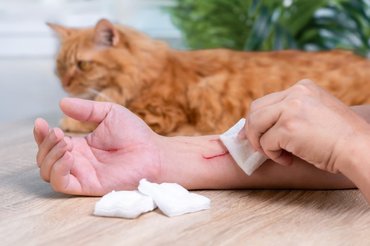
In people infected with Capnocytophaga, the first symptoms typically appear 3–5 days after a bite or scratch. Patients may experience blisters, redness, swelling, and pain at the site of the wound, as well as fever, diarrhea, vomiting, and headache.
Capnocytophaga bacteria can also reach internal organs and cause severe conditions such as heart attack, kidney failure, and gangrene (the death of body tissue). The infection can also lead to sepsis (blood poisoning) or meningitis (infection of the membranes covering the brain and spinal cord). Among patients who develop these severe conditions, the survival rate is around 30%, and in some cases as low as 5%.

The weaker the immune system, the higher the likelihood of both infection and severe, potentially fatal outcomes. Additional risk factors include alcohol abuse, smoking, absence of the spleen, and being over the age of 40.
Patients without a spleen have a 30–60% higher risk of death from Capnocytophaga infection compared to those whose spleen has not been removed. These patients may be particularly vulnerable because the spleen plays a vital role in the immune system’s response to bacteria such as Capnocytophaga. In such cases, severe illness can lead to death within just a few days.

Capnocytophaga infection can be treated with antibiotics, and starting therapy promptly can reduce the risk of serious complications. In patients who develop gangrene, amputation of the affected limb may be necessary.
The Centers for Disease Control and Prevention recommends that anyone bitten by a dog or cat should immediately wash the wound thoroughly with soap and water, disinfect the injury, and seek medical attention as soon as possible.
Follow us!
facebook instagram
Related articles




7 Reasons Why Cats Arch Their Backs
Life • 4 minutes
How to cut your cat's claws safely
Care • 3 minutes