Everything You Need to Know About Roundworm Infection in Cats
Published: 2026. 05. 18. 07:30 -
- Photos: Getty Images Hungary • 4 minutes readingPublished: 2026. 05. 18. 07:30 -
- Photos: Getty Images Hungary • 4 minutes reading
 Set WeloveCatz to appear first in Google search results!
We’ve emphasized countless times that as a loving pet owner, one of the most important things you can do for your pet is to consistently protect them against parasites. In addition to external parasites, we must not forget about internal ones.

One such internal parasite is the roundworm, which can cause serious health problems. Two species of roundworms can infect cats: Toxocara cati and Toxascaris leonina. These parasitic worms hide in a cat’s gastrointestinal tract, and although they may not initially cause serious symptoms, a long-term infection can lead to severe health issues.

If left untreated, especially in young cats and kittens, roundworm infection can cause weight loss, a dull coat, a bloated abdomen, vomiting, and diarrhea. In adult cats, symptoms usually appear only in cases of severe infection. Unfortunately, Toxocara cati is not only dangerous for our furry companions—it can also pose health risks to humans.
Roundworms, much like hookworms and tapeworms, are common intestinal parasites in cats and other animals. They are slender, cylindrical worms that can grow up to 10 cm long. They are typically white or light brown in color and resemble spaghetti in appearance. The eggs and larvae enter a cat’s body orally from the environment and then migrate through its tissues. If they reach the lungs, they cause irritation, prompting the cat to cough them up and swallow them again. Once back in the intestines, the larvae develop into adult roundworms and lay eggs, which are then excreted in the feces. These eggs become infectious after 2–4 weeks and can remain viable for months or even years.
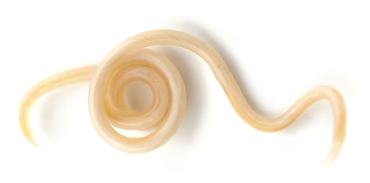
Prevention is especially important because cats often show no symptoms during the early stages of infection. In most cases, the symptoms are caused not directly by the worms themselves, but by nutrient absorption problems and possible intestinal bleeding. In severe infestations, the large number of worms may even cause intestinal blockage, which can result in serious symptoms such as vomiting, abdominal distension, and lethargy.
Sometimes, larvae settle in the liver and enter a dormant state. If a pregnant cat becomes infected during this time, the larvae can pass to the kittens through the mother’s milk after birth. The mother may also develop an active infection and shed large numbers of eggs in her feces, which can infect the kittens as well.

Cats can become infected through:
Roundworms mainly pose a risk to kittens and outdoor cats. Keeping cats indoors can be an effective preventive measure, though unfortunately this is not always possible. We must also keep in mind that indoor cats are not completely safe, as infectious eggs can be brought into the home on the soles of our shoes.
The most reliable form of prevention is regular protection. Today, there are many monthly medications available that protect cats not only against roundworms, but also against heartworms and other parasites. Be sure to consult your veterinarian for advice on the best option.

Toxocara cati can infect other cats and humans, but not dogs. Toxascaris leonina can spread to several species, including humans, though this is relatively rare. Humans become infected by accidentally ingesting the eggs. This most commonly happens to children, who may come into contact with contaminated soil while playing in the garden. The eggs can be transferred from the hands to the mouth, and once inside the body, the larvae migrate and cause inflammation.
Although the larvae cannot develop into adult worms in the human body, roundworm infection is far more than a minor inconvenience. The complications can be serious: damage to the liver, lungs, brain, or eyes may occur, potentially leading to vision problems or even blindness.
Follow us!
facebook instagram
Related articles




7 Reasons Why Cats Arch Their Backs
Life • 4 minutes
How to cut your cat's claws safely
Care • 3 minutes