


This Popular Kitchen Ingredient Can Be Deadly for Cats
Published: 2025. 07. 20. 07:30 -
- Photos: Getty Images Hungary • 4 minutes readingPublished: 2025. 07. 20. 07:30 -
- Photos: Getty Images Hungary • 4 minutes reading
We often emphasize that cats are obligate carnivores, meaning they derive all essential nutrients from animal proteins and do not need anything else. At the same time, we frequently write about which human foods soft-hearted owners might offer their curious cats—and which ones pose a serious risk to their wellbeing or even their lives, even in small quantities.

One such ingredient has been mentioned in a few of our articles, but we’ve never gone into detail about the extent of its danger. Let’s take a closer look at xylitol—also known as birch sugar—its effects on cats, and what current science has to say about the matter.
Xylitol, also known as birch sugar, is a sugar alcohol naturally found in some fruits and vegetables, but it’s also produced industrially. It’s usually extracted from birch trees, but can also be made from other sources like corn cobs. It tastes as sweet as regular sugar but has a lower glycemic index, making it popular among diabetics and people on diets. It’s increasingly present in various foods and even in flavored toothpastes, as it reduces the number of bacteria in the mouth that cause tooth decay.
Most of the research and knowledge on xylitol toxicity pertains to dogs, in whom it can cause severe, life-threatening reactions. In cats, however, the information is not as clear—but there are indications that liver damage may also occur. What complicates the situation further is that the symptoms of xylitol poisoning in cats are not yet known.
In dogs, rare cases of liver damage have been reported after consuming larger amounts of xylitol. It is suspected that this potentially fatal syndrome could also occur in cats. It appears that the risk of liver damage from xylitol toxicity depends on the individual animal’s metabolism—meaning not every animal will react the same, and it’s impossible to predict which ones might be affected. Consumption—or even just the suspicion of consumption—of xylitol-containing food requires immediate veterinary attention as a precaution!
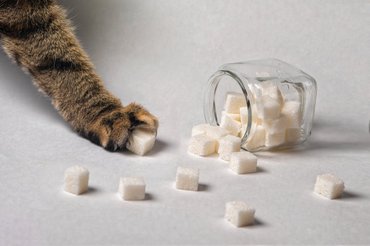
Some sources claim that xylitol is not dangerous to cats due to a lack of evidence. Although further research is needed to fully understand how this sugar substitute affects our purring companions, it would be highly irresponsible to declare it safe.
Many sources argue that no poisoning cases have been reported to poison control hotlines—only signs of possible sensitivity, which have not been well-documented—so this may not be a concern for cats.
In short: until we are completely sure about the effects of xylitol, it’s not worth the risk! Especially since, as we’ve said, cats don’t need anything other than meat to meet their nutritional needs.
A study conducted in June 2018 at the Department of Pharmacology and Toxicology of the University of Veterinary Medicine, led by Dr. Ákos Jerzsele, suggests that xylitol does not cause the same blood sugar-lowering, toxic effect in cats as it does in dogs. Since this hypoglycemic effect affects all dogs uniformly, it’s likely that if xylitol had the same effect in cats, it would also be observed consistently across individuals.
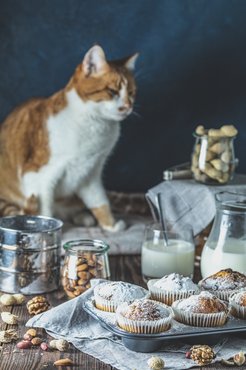
However, we can’t be as confident about its potential to damage liver cells. In dogs, xylitol-induced liver damage appears to be an individual, animal-specific response, and the same could be true in cats. So even though it currently seems that xylitol doesn’t cause liver necrosis in cats, this conclusion is based on a sample of just six cats, and cannot be stated with certainty.
The website Preventive Vet points out that while the study was well-designed and well-executed, the sample size—only six cats—was very small. Therefore, it’s still possible that xylitol could be toxic for certain cats, depending on breed, age, or other factors. Fortunately, many veterinarians and animal hospitals are now raising awareness about this.
Follow us!
facebook instagram
Related articles
You’ve Never Seen Cats With Patterns This Strange! (Video)
Life • 3 minutes
Tiger breaks loose during circus performance: how handlers guided it back (video)
Life • 2 minutes
The owner is surprised too by what their cat performs in front of the mirror (video)
Life • 2 minutes