9 Human Foods That Can Be Deadly to Cats
Published: 2025. 08. 16. 07:30 -
- Photos: Getty Images Hungary • 4 minutes readingPublished: 2025. 08. 16. 07:30 -
- Photos: Getty Images Hungary • 4 minutes reading
 Set WeloveCatz to appear first in Google search results!
Some people say this topic is beaten to death, but as long as we see cases where cats are given cake portions or even stew gravy with bread crust, we can’t stop sharing these kinds of lists.

Here are the most toxic foods for cats. The list also explains why each food is toxic and what effects it can have.

Before we begin, let’s pause for a moment. Whether something is toxic, or how toxic it is, depends on the amount consumed, the individual cat’s sensitivity, its health condition, and also its size. For example, a sick adolescent kitten may be affected by much smaller amounts than a fully grown, healthy male cat. For the foods listed below, it’s not worth taking any risks even with small amounts, as irreversible consequences can occur!
All onions contain a compound called thiosulfate, which damages red blood cells in cats, causing hemolytic anemia. This means premature breakdown of red blood cells, leading to oxygen deficiency in tissues, and in severe cases organ damage or death. Symptoms of poisoning—such as lethargy, rapid breathing, pale gums, vomiting, diarrhea—often appear only days after eating onions. All forms of onion—raw, cooked, dried, or powdered—are dangerous to cats.

Chocolate, specifically the cocoa in it, is toxic to cats due to the theobromine and caffeine it contains. These compounds stimulate the central nervous system and heart, and cats metabolize them very slowly, so they can accumulate and cause prolonged symptoms. Signs of poisoning (restlessness, tremors, vomiting, rapid heartbeat, arrhythmia, seizures) often appear hours later or even the next day. The darker the chocolate, the higher its theobromine content, and the more dangerous it is.
The yeast in raw dough continues to ferment in the warm, moist environment of a cat’s stomach, producing carbon dioxide and alcohol. This can cause bloating, painful abdominal swelling, vomiting, and in severe cases alcohol poisoning. The gas pressure can press on the diaphragm and internal organs, causing breathing difficulties and circulation problems. Even a small piece of raw yeast dough is very dangerous for cats.

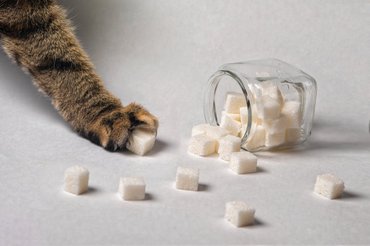
Most research on xylitol toxicity focuses on dogs, where it can cause severe symptoms. For cats, information is unclear, but there are indications that liver damage may occur. The symptoms of xylitol poisoning in cats are not yet well understood.
In dogs, liver damage can occur after consuming large amounts of xylitol. It is assumed that this potentially fatal syndrome could also develop in cats. The likelihood of liver damage from xylitol toxicity seems to depend on the animal’s metabolism—meaning not all animals react the same, and it’s impossible to predict which will be affected. Any consumption or suspected consumption of xylitol-containing food requires immediate veterinary care as a precaution!
The exact toxic substance in grapes and raisins is unknown, but even a few pieces can cause severe effects. Some cats may show mild symptoms, others may develop acute kidney failure. Symptoms appear within 6–12 hours and include vomiting, diarrhea, loss of appetite, dehydration, and then cessation of urination. Without treatment, it is fatal.
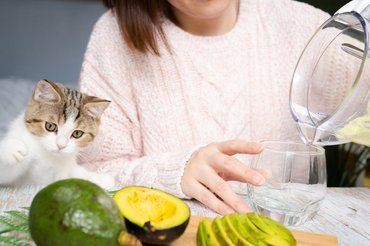
Avocado contains a fungicidal toxin called persin, which primarily causes vomiting and diarrhea in cats, although in severe cases—especially with large amounts or sensitive individuals—it can cause heart muscle or respiratory problems. Cats are less sensitive to persin than birds or rabbits but it is not risk-free for them. The highest persin content is in the stem and leaves, followed by the skin, the pit, and then the flesh—especially parts close to the skin.
Moldy foods often contain mycotoxins, such as tremorgenic toxins that can cause seizures. Even a small amount of moldy bread or cheese can cause neurological symptoms like muscle tremors, convulsions, and loss of coordination. In severe cases, liver damage, coma, and death can occur. Mold toxins are heat resistant and do not break down during cooking, so never consider saving moldy food from the trash to feed your cat! And this should be taken seriously for ourselves, too—mold spreads throughout the entire food, so just scraping it off is useless.
Ethanol in alcohol is rapidly absorbed by cats and affects them much more strongly than humans or even dogs. It impacts the nervous system, heart, and respiratory centers, which can lead to coma or respiratory failure in severe cases. Even a small amount of beer, wine, or alcoholic sweets can cause poisoning. Typical symptoms: vomiting, loss of coordination, staggering, drowsiness, and slowed breathing.
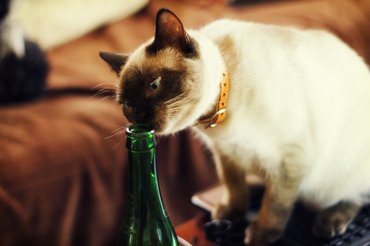
As with theobromine, caffeine is eliminated very slowly from a cat’s body, causing prolonged overstimulation. It affects the heart and nervous system, potentially causing arrhythmia, restlessness, tremors, vomiting, and seizures. In energy drinks, other stimulants (like guarana) can increase the toxicity. Even the smallest sip can be dangerous, especially for small or elderly cats.
Follow us!
facebook instagram
Related articles

7 Reasons Why Cats Arch Their Backs
Life • 4 minutes
How to cut your cat's claws safely
Care • 3 minutes