The World’s Rarest Big Cat Is Native in Russia: Only Slightly More Than 100 Specimens May Live On Earth
Published: 2025. 09. 29. 07:30 -
- Photos: Getty Images Hungary • 4 minutes readingPublished: 2025. 09. 29. 07:30 -
- Photos: Getty Images Hungary • 4 minutes reading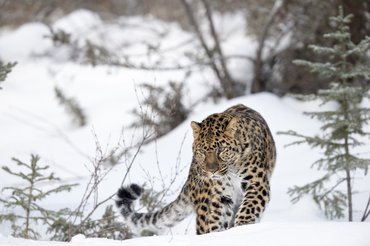
 Set WeloveCatz to appear first in Google search results!
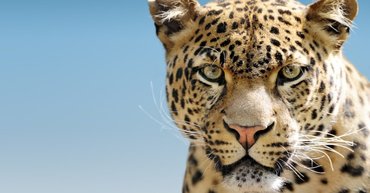
The Amur leopard (Panthera pardus orientalis) is one subspecies of the leopard, which is not native on the savannahs of Africa, but lives in the south-eastern part of Russia, in the Primorye region, as well as in North China. The Red List keeps them as critically endangered. According to the estimates, about 130 individuals may live on our planet.

From the following you may get to know in more detail the Amur leopard, and also we mention why they drifted to the edge of extinction.
The question may arise in you, what do leopards seek outside Africa? Well, the Amur leopards reached North China and the Far-Eastern part of Russia as part of their natural distribution. The eastern and northern populations in a long time isolated themselves from the more southern leopards, thus the subspecies Amur leopard developed. The wild individuals wandered on large areas, thus they expanded in the region, then during the 20th century because of deforestation and poaching the populations fragmented, thus by now the Amur leopard is the world’s rarest big cat. According to genetic examinations the Amur leopard is closely connected to the north-Chinese and the Korean leopards, which also indicates that the population fragmented at the beginning of the 20th century.
In appearance they differ somewhat from other leopard subspecies: they at once grasp our eye with their thick, light beige shade coat in winter, on which striking, sparse rosettes draw themselves, which are larger in size, as well as in their middle the hair is darker than the base colour of the coat. The winter fur is extremely dense and long, in summer however shorter and of more vivid shade, but even then gives a more lush impression. Their size is somewhat smaller among the leopards: the males’ body length is 107–136 centimetres, their tail length 85–95 centimetres, their weight 48–70 kilograms. The females are smaller: their body length is 91–115 centimetres, their tail 75–80 centimetres, their weight moves around 25–43 kilograms.
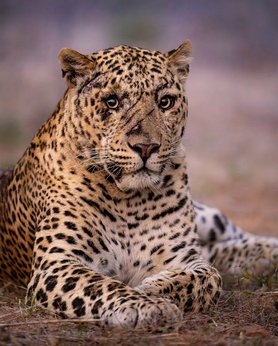
The Amur leopards live solitarily, they range large territories during hunting. The males’ territory is 60–100 square kilometres, which they mark with urine and scratches. The females raise their offspring for about two years, their main nourishment consists of deer, wild boar, foxes, and hares. They are agile and strong animals, often they hide the half-left prey from other predators. In leaner times they also resort to carrion left by other animals.
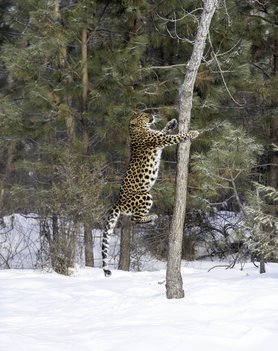
Similarly, to other leopards, the Amur leopard is also able to run even at 60 km/h speed, as well as more than 6 m distance horizontally, and even 3 m height vertically jump.
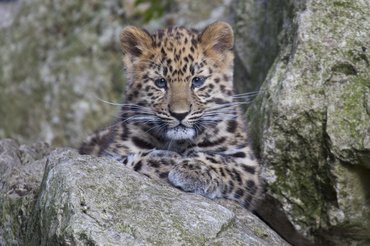
The survival of the Amur leopard is endangered primarily by poaching, the hunting of prey animals, the loss of habitats and deforestation. Their natural habitats are also threatened by fires and the building of roads, meanwhile because of the small number of wild populations their gene pool is very limited, which increases the risk of inbreeding. In 2015 a wild specimen was found with a disease similar to rabies in Primorskyi Krai, which shows that the small populations are exposed to diseases which domestic or wild animals may carry. The Amur leopards in certain areas live together with the Siberian tigers, but from the tigers they generally withdraw to higher areas and farther from the settlements.
Poaching perhaps means the greatest danger for the survival of the species. The local inhabitants hunt them illegally and try to sell the leopard furs on foreign markets. The fires caused by humans, for example agricultural burnings, also mean a serious threat, since the significant part of the south-west Primorye areas burns out year by year, thus instead of dense forests open savannah-like areas develop. The habitat development plans, for example building of oil pipeline or open coal mines, also meant serious risk for the species, mainly because of the intensifying human presence.
Besides all these, inbreeding also exerts serious negative effect on the species. The genetic diversity of the population is very low, which also causes problems in reproduction and in the survival of the offspring. In the last decades the survival of the cubs continuously decreased, which further increases the vulnerability of the small population. Unfortunately, as consequence of this the survival of the Amur leopard is extremely sensitive to diseases, human effects and genetic problems alike.
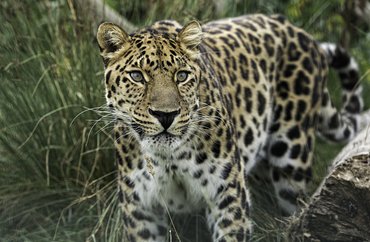
From ecological, economic and cultural point of view also an important species. The preservation of their habitat is also advantageous for other species, among them the Amur tigers and the prey animals, for example the deer. For the protection of the Amur leopard conservationists and governments created protected areas, where poaching is forbidden and human activities are limited.
With camera-trap surveys and scientific observation they follow the movement and the state of health of the population. In certain areas they carry out rehabilitation of the habitat, for example with replanting of the forests and regulation of the fires. For the helping of the reproduction of the species, individuals raised in captivity are also released back into the wild, in order to increase the gene pool.
Thanks to these measures in the last years the wild population gradually increased, and at present about 128–130 individuals live freely, which however is still unbelievably few, but undeniably progress compared to the 50 individuals counted in 2015.
Click here to discover some interesting facts about snow leopards.
Follow us!
facebook instagram
Related articles

7 Reasons Why Cats Arch Their Backs
Life • 4 minutes
How to cut your cat's claws safely
Care • 3 minutes