Cats’ “sixth sense” gives them an extraordinary ability
Published: 2026. 04. 27. 07:30 -
- Photos: Getty Images Hungary • 3 minutes readingPublished: 2026. 04. 27. 07:30 -
- Photos: Getty Images Hungary • 3 minutes reading
 Set WeloveCatz to appear first in Google search results!
In their case, however, we shouldn’t think of anything supernatural or spiritual. This skill is very much of this world—and the most interesting part is that humans possess it too.

In this article, you can learn what this so-called “sixth sense” in cats actually is, and also find out when an animal might lose it.

In cats, the ability often referred to as a “sixth sense” is called proprioception, which means sensing the position of different parts of the body relative to one another. Put more simply, it is an internal sense that allows us to be aware of our body’s position and movement in space. It is essential for motor control, balance, and the coordination of fine movements.
As described on the website of the Spine Healing Center: “Proprioception is a continuous feedback loop within the nervous system that tells our brain what position the body is in and what forces are acting on it at any given moment. Thanks to proprioception, we can know where we are in space even with our eyes closed. Any complex, coordinated action is impossible without well-developed proprioception—it is the foundation of our agility and stability. […] It plays a major role in self-regulation, coordination, posture, body awareness, presence and focus, as well as speech.” This also shows that most living beings possess it—yes, even plants, despite not having a central nervous system.
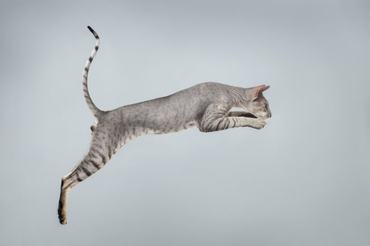
What’s more, proprioception is especially well developed in cats. They process incoming information incredibly quickly, allowing them to correct their movements instantly—even while falling. This ability plays a major role in how they manage to land on their feet even from great heights.
A very interesting study published in 2019 examined how human limbs function as sensory antennas during walking. Researchers found that humans and cats share many similarities in the neural control of movement. The study concludes:
As in habitual quadrupeds like the cat, human walking is a relatively automated process arising from complex interactions of supraspinal input, spinal CPG activity, and sensory feedback. Sensation from multiple sources is essential for precise coordination during walking, but cutaneous feedback is particularly important for the maintenance of stability when the locomotor environment changes or includes obstacles and hazards. Reflexes from cutaneous innervation of the foot is highly topographically organized, phase-modulated, and functionally relevant. Ultimately, our feet act as “sensory antennae” to integrate sensorimotor interactions during walking.
Based on this, it’s interesting to consider how much shoes—especially those with thick soles or high heels—may hinder our ability to properly perceive our environment.
Several conditions can disrupt normal proprioception, including (but not limited to) spinal cord injury, intervertebral disc disease, brainstem damage, brain tumors, or general deterioration of the neuromuscular system due to aging or arthritis. A lack of proprioception in a cat’s limbs leads to a loss of sensation, affecting paw and leg positioning and the ability to move correctly. Signs of this serious condition may include abnormal limb posture, stumbling, a wobbly gait, paralysis, weakness in the limbs, seizures, or hind legs that crouch or drag along the ground.
It is very important that if your pet is injured, has fallen, or suddenly shows any of the symptoms described above, you take them to a veterinarian immediately. Treatment depends on the underlying cause. In cases of nerve damage, some recovery and regeneration of nerve function may be possible. The cat may receive anti-inflammatory medication or steroids along with pain relief. If the loss of proprioception is caused by arthritis due to aging or general physical decline, corticosteroids and painkillers will likely be prescribed.
Follow us!
facebook instagram
Related articles
7 Reasons Why Cats Arch Their Backs
Life • 4 minutes
How to cut your cat's claws safely
Care • 3 minutes