Could it be that the cheetah is not the fastest land animal after all?
Published: 2025. 09. 13. 07:30 -
- Photos: Getty Images Hungary • 4 minutes readingPublished: 2025. 09. 13. 07:30 -
- Photos: Getty Images Hungary • 4 minutes reading
 Set WeloveCatz to appear first in Google search results!
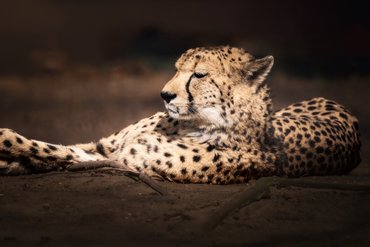
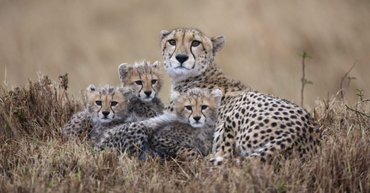
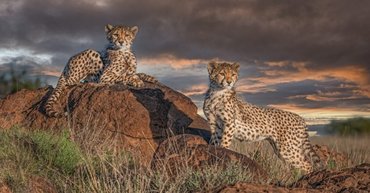
When we want to determine the fastest animal on land, we must also take the length of the distance into account. We know from human athletic competitions that short-distance races produce the highest speeds, since these top speeds cannot be maintained over longer distances. If we look only at maximum speed, then – as many know – the fastest land animal is the cheetah, which can reach speeds of up to 113 km/h. Although it is impressively fast, it can maintain this pace for only about 270 meters. This is precisely why, when it comes to hunting, it still relies heavily on stealth – the element of surprise.

The English Greyhound’s top speed is currently measured at around 72 km/h. So how could it possibly compete with a cheetah? Well, let’s explain. Let’s see how the dog can challenge the title of the fastest land animal!
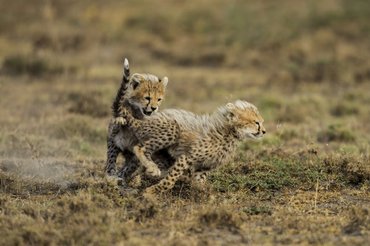
Let’s dive a bit into canine history for a clearer picture.
Humans have selectively bred dogs so that certain breeds became much faster than most other animals. Truly fast dogs include English Greyhounds, Whippets, Salukis, and Afghan Hounds. In English, these breeds are called sighthounds – because they rely on their vision to spot and chase their prey. These dogs have a distinctive physique: their massive chests hold enormous lung lobes and a large heart, which help with oxygen intake. Their narrow waist allows the body to flex, so that with every stride they cover more than a body length.
Of all the breeds listed above, the English Greyhound is considered the fastest, and it can maintain high speeds even over relatively long distances. At full effort, its heart rate can reach 300–360 beats per minute – meaning it pumps blood five times per second, supplying oxygen to the muscles with incredible efficiency. Its acceleration is equally impressive: from a standing start, it reaches 72 km/h in fewer than six strides. Among land animals, only the cheetah can accelerate so quickly.
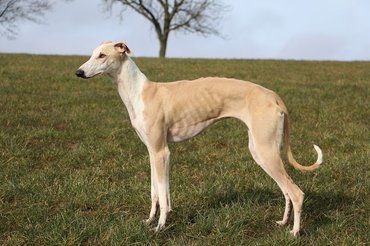
To illustrate just how fast an English Greyhound is: when Usain Bolt set the 100-meter world record, he ran at an average speed of 36.9 km/h and finished in 9.58 seconds. A Greyhound would cover the same distance in just 5.33 seconds.
But the English Greyhound is not just a sprinter – it is also an outstanding distance runner. It can run at 56 km/h for as far as 11 kilometers. This means that while the cheetah wins the short-distance sprint, over longer distances the Greyhound would easily leave the spotted cat behind.
It’s worth mentioning other dogs here as well, since some breeds excel even more in super-marathon distances. Siberian Huskies and Alaskan Huskies (an unofficial type bred specifically for speed and endurance) are capable of astonishing feats. The Iditarod race starts near Anchorage, Alaska, and ends in Nome, covering a total of 1,868 kilometers. The competing sled dog teams run up to 200 kilometers a day, often in six-hour intervals, for 9–14 days, while pulling sleds weighing over 100 kg. They do all this in extreme weather conditions, sometimes with wind chills as low as –73 °C. The current Iditarod record is held by Mitch Seavey, who, together with his dogs, completed the race in 8 days, 3 hours, 40 minutes, and 13 seconds in 2017.
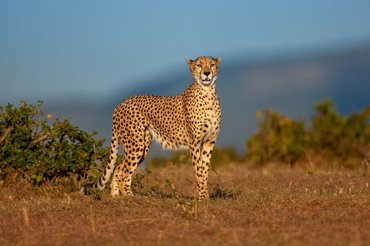
But to give the cheetah its due, here are a few fascinating facts about its technique and abilities. This cat’s incredible speed is made possible by its flexible spine and long stride length: with a single leap, it can cover up to 7 meters. While running, it digs its semi-retractable claws into the ground for traction, and uses its long tail like a rudder to make sharp turns. Its hind legs bear most of the load and provide the explosive power for acceleration. Within seconds, it reaches nearly 100 km/h, but can maintain this speed for only about 20 seconds. To deliver oxygen quickly to its hard-working muscles, its entire respiratory system expands. During a sprint, the cheetah takes 150 breaths per minute, compared to 60 when at rest.
As mentioned earlier, this is why it stalks its prey first, closing the distance stealthily before launching a lightning-fast chase to bring the animal down before it tires out. For the cheetah, speed is not the only key factor – agility and the ability to change direction rapidly are also crucial when it comes to a hunt.
Follow us!
facebook instagram
Related articles


7 Reasons Why Cats Arch Their Backs
Life • 4 minutes
How to cut your cat's claws safely
Care • 3 minutes