How can you stop your cat from scratching the furniture?
Published: 2026. 04. 20. 07:30 -
- Photos: Getty Images Hungary • 3 minutes readingPublished: 2026. 04. 20. 07:30 -
- Photos: Getty Images Hungary • 3 minutes reading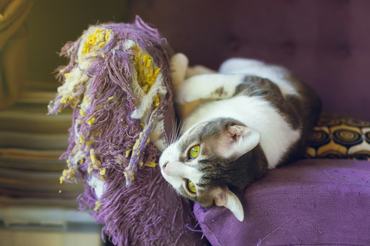
 Set WeloveCatz to appear first in Google search results!
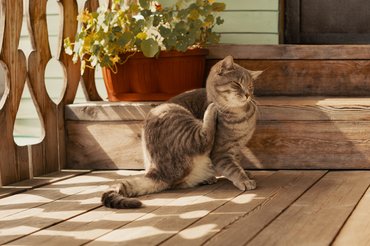
The side of the sofa, the leg of an antique table, or even the edge of the rug—your cat shows no mercy, digging its claws into anything that feels comfortable. The question isn’t how to forbid the behavior, but how to redirect it in a way that satisfies your cat’s needs while keeping your home intact.

Since scratching is an instinctive activity for cats, you can be sure you won’t be able to eliminate it entirely from your life. Still, it’s perfectly understandable if you don’t want to look at shredded furniture. So here are a few tips to help protect your belongings from those sharp little claws.
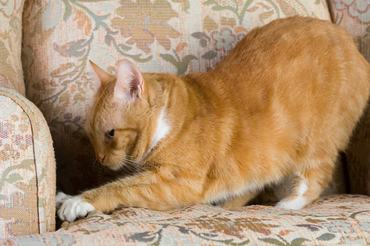
Let’s make one thing clear: it’s not to annoy you. Scratching is a fundamental, instinctive behavior for every cat. And it’s not just about sharpening their claws.

Researchers were also intrigued by this behavior and conducted a survey among owners whose cats scratched in undesirable places. An important criterion was that participants could only have one cat, to exclude scratching caused by conflicts between cats. Another condition was that each household had to provide at least one usable scratching surface.
According to the survey, most cats did use the scratching surfaces provided (63–74.8%). However, cats that scratched frequently tended to “attack” multiple locations, with sofas being their favorite target.
The results also showed that sex, breed, and physical condition did not affect how much a cat scratched. Personality, however, did: cats described as destructive or aggressive were more likely to be frequent scratchers. Playful and active cats were also more prone to scratching often. The presence of children in the household was also linked to increased scratching.

Cats often choose surfaces that are:
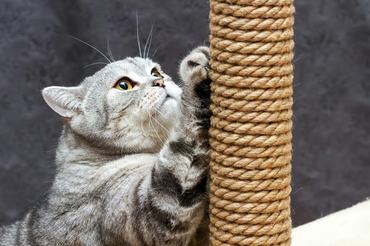
As mentioned, you can’t expect a cat not to scratch—but you also shouldn’t have to watch your home deteriorate. Fortunately, cat behavior experts offer several tips to help minimize damage. Scratching posts play a crucial role, but it matters how many you have, where you place them, their size, and their material. According to cat behavior expert Dr. Mikel Maria Delgado, the more scratching surfaces, the better.
For example, her three cats have 4 small scratching posts, 4 large cat trees, and 3 horizontal scratching surfaces—so they leave the furniture alone.
Follow us!
facebook instagram
Related articles




7 Reasons Why Cats Arch Their Backs
Life • 4 minutes
How to cut your cat's claws safely
Care • 3 minutes