Wild in the Living Room: Three F1 Savannahs Lock Eyes with a Squirrel (video)
Published: 2026. 04. 12. 07:30 -
- Photos: Getty Images Hungary • 3 minutes readingPublished: 2026. 04. 12. 07:30 -
- Photos: Getty Images Hungary • 3 minutes reading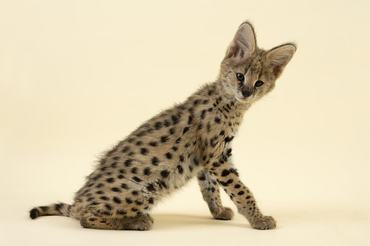
 Set WeloveCatz to appear first in Google search results!
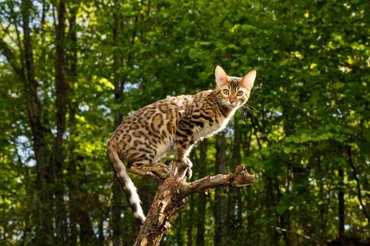
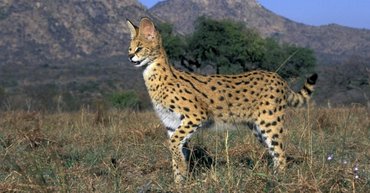
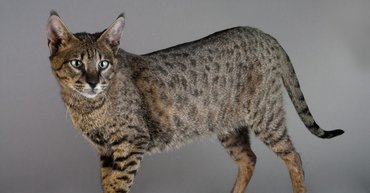
F1 Savannah cats are the direct, first-generation offspring of the wild African serval and the domestic cat. With their majestic appearance and extraordinary jumping ability inherited from their wild ancestors, they are the true aristocrats of the feline world.

In our article, you can learn exactly what “F1 Savannah” means and what is worth knowing about these fascinating hybrids, whose care is at least as challenging as their appearance is stunning.
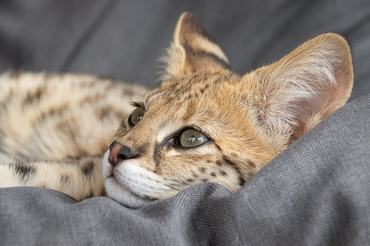
Many people get lost among the labels, but the formula is actually simple: the “F” number indicates generations, that is, how far the animal is from its wild ancestors. In the case of an F1 cat, the father is still a real African serval and the mother is a domestic cat; for F2, the serval is the grandfather, and so on up to F6.
Krisztina Horkai, breeder of Savannah cats at Christine’s Cattery, explained in an earlier interview with our magazine that in Hungary, Savannahs “can be kept as pets from F5, meaning from the fifth generation; the first four generations require a special permit with very strict conditions. Only from the fifth generation can the animal officially be called a Savannah; those before that are hybrids. In Hungary, the serval is classified as a moderately dangerous wild animal, and the same regulations apply to hybrids from F1 to F4 as to the serval itself—even if they are cuddly, sweet ‘lap cats’ and have never caused any problems.”
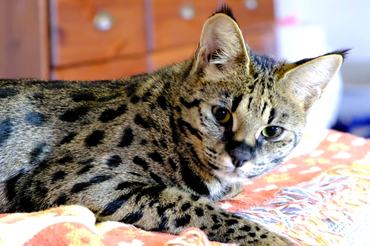
Naturally, F1s resemble the serval the most, meaning they are much closer to wild animals. But this should be understood in the sense that their family bonds are also much stronger, so they tend to form very close attachments to us as well.
The closer an animal is to its wild form, the gentler and more affectionate it is as a young kitten. Think about it: the mother goes out to hunt, the little one is left alone and frightened where it was placed, and when the mother returns, the reunion brings immense joy. This bond is further reinforced through a kind of mother–offspring ritual. Experiencing this with an animal as a human is an extraordinary privilege. However, if this bond is allowed to deteriorate, that attachment fades from the animal. Within their own family, these animals are much kinder and more affectionate with each other—made possible by their strong internal attunement
– explained zoopedagogue György Czéher in the previously mentioned interview.
In the video below, three magnificent F1 Savannah cats watch a squirrel jumping around in the garden with bated breath: for them, the window glass is the only barrier between instinct and reality. The footage is remarkable not only because of their striking appearance, but also because it highlights the primal force with which they carry the legacy of their wild ancestors.
(The opening image is an illustration showing a serval kitten.)
Follow us!
facebook instagram
Related articles
7 Reasons Why Cats Arch Their Backs
Life • 4 minutes
How to cut your cat's claws safely
Care • 3 minutes