The cat is not just a passive observer in the family: this is how it mirrors its owner
Published: 2026. 04. 19. 07:30 -
- Photos: Getty Images Hungary • 5 minutes readingPublished: 2026. 04. 19. 07:30 -
- Photos: Getty Images Hungary • 5 minutes reading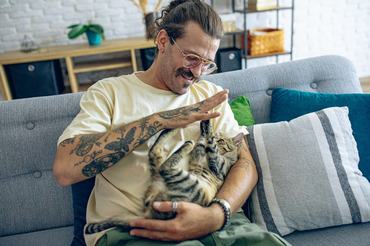
 Set WeloveCatz to appear first in Google search results!
Even those who have lived with cats for a long time can sometimes feel unsure about what their pet is trying to communicate through its behavior. Yet if we pause for a moment and remind ourselves that our cats carefully observe us during the time we spend together—and adjust their own behavior accordingly—many things start to make sense.

They watch how we move, how we speak, how predictable we are, and whether our energy is calm or restless. When their behavior begins to resemble ours, it does not stem from conscious imitation, but rather from a response to their environment—and at the center of that environment is the owner. Let’s take a closer look at how cats mirror and imitate us, and what we can learn from their behavior.
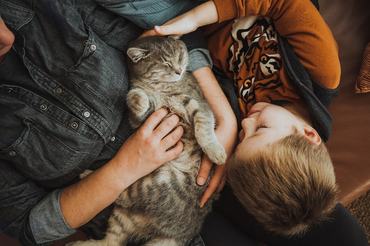
As noted in a CFA article, cats reflect not so much our personality as our nervous system. Like dogs, they are exceptionally sensitive to emotional states. They can detect changes even before we consciously register them—our scent, tone of voice, posture, and breathing reveal us instantly.
However, it would be a mistake to think they need us to be calm all the time. That would be unrealistic—and fortunately, it’s not what they require. As we know, routine and predictability provide them with the greatest sense of security. As an owner, the most important thing you can do is remain consistent. Emotional reliability matters more to them than emotional perfection.
When stress becomes chronic in our lives and households, cats often try to adapt in subtle ways. Their appetite or playfulness may decrease, their sleep patterns may change, and their need for—or tolerance of—physical closeness may shift. These changes are not negative behavior patterns, but attempts to restore a sense of safety. In essence, when our nervous system is unsettled, theirs responds.
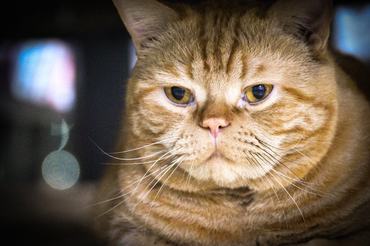
In recent years, numerous studies have explored how human emotions and interactions influence cats on both physiological and behavioral levels. A 2020 study clearly showed that our pets do not ignore human emotions. In fact, when exposed to human expressions of anger—whether through voice or facial cues—they display more stress-related behaviors than when they encounter happiness or the sound of other cats purring.
Beyond perception, stress hormone studies have also revealed measurable changes in cats in response to environmental stressors—including human factors. A 2023 study measured cortisol levels in hair (a long-term stress biomarker) and found that cats exhibiting behavioral problems (such as inappropriate elimination or aggression toward humans) had significantly higher cortisol levels.
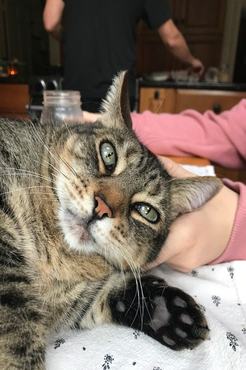
Physiological research from 2022 further showed that patterns of human–cat interaction are linked to cats’ hormonal signals. In a home environment, cats whose owners touched and spoke to them more frequently had higher levels of oxytocin in their urine—a hormone associated with positive bonding. This means that cats’ stress and comfort hormones are not abstract concepts: they are influenced by how often we touch them and how we communicate with them.
If a cat experiences prolonged high levels of stress, it can lead to both behavioral and health changes. Chronic stress is associated with patterns such as reduced appetite, aggression, and elimination issues. It can be caused by factors such as frequent conflict at home, high noise levels, or an unpredictable daily routine—to name just a few.
So it’s worth emphasizing again: cats observe us, but they are not passive observers. Their bodies clearly respond to environmental stimuli.
We’re not talking about physical safety now, but emotional safety—which is just as important for a living, feeling being. Consistency is one of the clearest ways a cat’s behavior reflects its owner’s. But what does that mean in practice? Nothing complicated: regular feeding times, regular play (a familiar routine), and emotionally reliable interactions—everyday life free from shouting, physical punishment, and the repeated rejection of the cat’s attempts to connect.
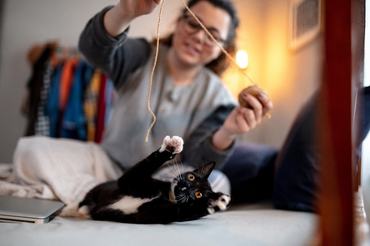
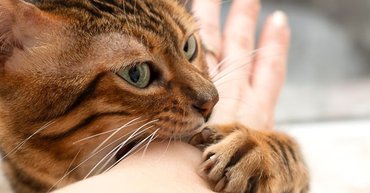
When the daily routine becomes irregular, or the availability of the owner—the source of safety—becomes inconsistent, the cat senses this instability and reacts, as the studies mentioned above also demonstrate. How does it react? In various ways, but this is when you might see nighttime waking, increased vocalization, or attention-seeking through paws and teeth. We often interpret these as mere bids for attention, but it is more accurate to see them as attempts by the animal to restore rhythm in an unpredictable environment.
Unless there is sudden, severe pain, behavioral changes in cats rarely happen from one day to the next. More often, we only react when the situation becomes extreme—when it becomes noticeable enough to bother us. A previously affectionate cat does not suddenly become distant or aggressive overnight, just as a calm cat does not start reacting to everything with an arched back, hissing, or running away.

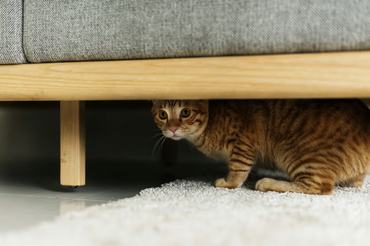
We often say that cats are masters at hiding pain—and this applies to emotional burden as well. They tolerate a great deal, trying various ways to restore a sense of safety and familiarity. But stress accumulates, and eventually the cat may seem unmanageable or no longer like itself. In most cases, however, it simply means the cat can no longer tolerate the situation—and its reaction becomes more overt.
If you take just one idea from this article, let it be this: cats are deeply influenced by how much choice they are given. Attempts to control their movement or access to resources often increase tension rather than reduce it. If your pet can decide when to connect, it will gradually become calmer and more affectionate. When choice disappears, resistance often appears—and this, in many ways, is more similar to human behavior than most people would like to admit.
Follow us!
facebook instagram
Related articles

7 Reasons Why Cats Arch Their Backs
Life • 4 minutes
How to cut your cat's claws safely
Care • 3 minutes