The Basics of Cat-Walking: This Is How It Becomes Safe And At The Same Time Enjoyable
Published: 2025. 08. 04. 07:30 -
- Photos: Getty Images Hungary • 6 minutes readingPublished: 2025. 08. 04. 07:30 -
- Photos: Getty Images Hungary • 6 minutes reading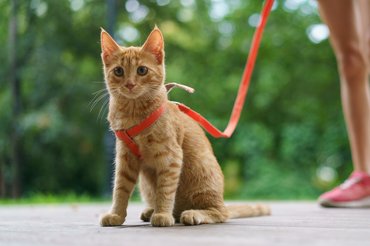
 Set WeloveCatz to appear first in Google search results!
Cat-walking is a relatively new thing, yet it is already increasingly popular even in our country among those who keep their cat indoors. However, accustoming a cat to a harness, a lead, and walking can come with many challenges, so we have collected a few tips below, which can help make the process smoother.

In today’s world, more and more arguments can be brought up in favour of indoor keeping, but the most important among these is the cat’s safety. Unfortunately, the life of an outdoor-going cat is increasingly dangerous; from accidents to illnesses they are exposed to many threats, and this is reflected in the average lifespan of outdoor cats too, which is only 2–5 years.
But cats’ legendary love of freedom does not make things easy for humans, especially since an indoor cat is just as curious as an outdoor one, and they need to release their mental and physical energy somewhere. There are several solutions for this, which we won’t go into detail about now, since we have already covered the topic many times.
But one of these is cat-walking, which gives our pets the opportunity to explore the outside world in a controlled and safe setting – thereby providing them with enough exercise and mental stimulation. Cat-walking can also have numerous other positive effects, provided the cat is used to the situation and enjoys it. To achieve this, we brought a few tips.
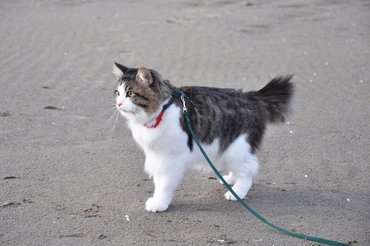
Cats are at once predator animals and prey, so the idyllic cat-walking can break at several points. On the one hand, it is in the cards that they start after a bird or another prey animal. On the other hand, they can easily be upset by environmental factors they experience as threatening: this can be, for example, the scent or sight of another cat. In the latter case, the behaviour of the cat on the lead can change in a moment, they may become nervous, and fear can overcome them, which can result in freezing, attempting to flee, or even showing aggressive behaviour toward their environment.
It is also important to keep in mind that accustoming a kitten to walking is different from doing so with an adult cat. In the former case, one can expect a shorter and more successful process, the result of which may even be a shared hike, which is now often seen on social media. In the latter, it can be assumed that the process will be slower, and it may even stop at some point. In such cases, one must not forget that we are not accustoming our pet to the harness and lead so that we walk kilometres with them, but to safely open the world to them. So, if they are only willing to go 500 metres away from the safety of home, then it is important to respect that and not to force them to go further.
In the case of cat-walking, if the situation allows, it is important that the cat feels that mostly they are in control and have choice, so it is less likely that they start to panic.
Cat-walking from the human’s side may involve less walking and more standing in one place. I experience this with my own cat too, that they don’t go long distances, rather thoroughly explore one square metre and sniff every surface within their reach.
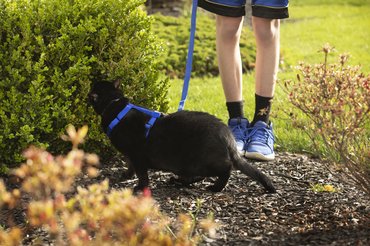
Before you step out the door with your cat it is important that their vaccinations are in place, and you also take care of protection against different parasites. In addition, the microchip is also outstandingly important, especially under the new European Union regulations. Furthermore, attaching an ID tag to their neck is also recommended, for safety’s sake.
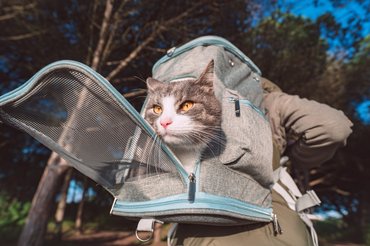
You can also support your cat’s safety by getting them used to a cat carrier. This can serve as a safe bubble in the outside world, where they can retreat if frightened, or if you as the human see that your whiskered friend needs a bit of calm. This can be especially useful if you would like to travel with your pet.
Cat-walking begins with choosing the right-sized harness. Unfortunately, there is no harness from which, if they really want to, our pet cannot get out, but by choosing the right size (usually it is written on the harness where you should measure your pet to ensure the best possible fit), and having a few tricks in our pocket, this can be minimised.

The first step is to get our cat used to wearing the harness. This is best done indoors, in a safe environment. At first, we do not attach the lead yet, and we do not try to lead them anywhere, just put the harness on and help them feel comfortable in it. We reward them, play with them... In the beginning, we put the harness on frequently but for short periods, then as they feel more and more comfortable, this time can be extended.
The next step is attaching the lead. The most important tip we would add here is that our pet should be on a loose lead, they should not get behind us, and we should aim to keep the part of the lead we hold always behind the attachment point on the harness. This minimises the chance that our cat slips out of it. Of course, this is easier said than done, but this is why it is important to start practising lead-walking indoors. In addition, it’s worth teaching our cat to follow us when called, which is most easily done using treats.
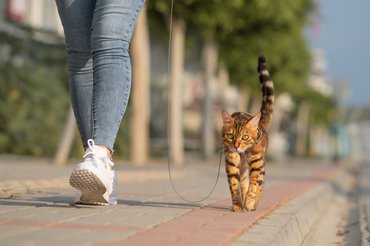
Anyone who takes care of their cat (and those interested in cat-walking certainly belong in this group) probably knows that a cat requires a good dose of patience. Whether you are teaching them tricks or setting the rules of shared life, this genre is just like that. So probably we’re not saying anything new by saying that cat-walking also requires patience. And, as we have hinted many times above, gradualness is likewise key in this process—not just in getting used to the harness, but also in the next steps.At first, we may only get to the gate with our cat, or just 10 metres away from them, or maybe they don’t want to stay out longer than 5 minutes. Still, we mustn’t rush the process; it is much more important that they feel confident and safe during the walk.
One must also not forget that our pet has to get used to the noises of the outside world: so it can also be a good solution to first introduce our whiskered companion to the world not on a lead, but in a cat carrier, with lots of positive reinforcement and care.
It’s important to recognise when the situation is too much for our cat. If they show the following signs, it is worth cutting the walk short:
No matter how much time and energy we put into getting our cat used to the harness and lead, not every cat enjoys walking. But luckily, cat-walking is not the only way to get our pet some fresh air. If there’s a possibility, a catio can also be an excellent option!
One of the main reasons why it's so important to gradually build up your outdoor adventures with your cat is the risk of your beloved pet running away — and here are the main reasons why that might happen. Although this is more commonly seen with outdoor cats, accidents can happen, so it's best to be prepared.
Follow us!
facebook instagram
Related articles
7 Reasons Why Cats Arch Their Backs
Life • 4 minutes
How to cut your cat's claws safely
Care • 3 minutes