Why Does Your Cat Bring You Gifts?
Published: 2025. 08. 10. 07:30 -
- Photos: Getty Images Hungary, welovecatz.hu • 3 minutes readingPublished: 2025. 08. 10. 07:30 -
- Photos: Getty Images Hungary, welovecatz.hu • 3 minutes reading
 Set WeloveCatz to appear first in Google search results!
Did your kitty bring you a gift? Don’t panic! It might just be their way of showing love. Let’s explore what could be behind this noble gesture.

If you've ever found a dead—or sometimes very much alive—mouse, bird, or lizard at your door, brought home as a “gift” by your feline friend, you've probably wondered why they do it. While much has already been said about this topic, this time we’re approaching it from a different perspective. Your cat’s behavior might seem disgusting, touching, or mysterious—depending on your viewpoint—but at its core, it stems from very natural instincts.

If your cat roams outdoors, you might occasionally be greeted with an unpleasant surprise that can leave many owners puzzled. The answer to “Why do they do this?” isn’t that they aren’t being fed enough. The explanation lies much deeper—in the process of evolution. According to Dr. Stephanie Liff, veterinarian and medical director at Pure Paws Veterinary Care in New York City : “Cats are predatory by nature.”
Even though they were domesticated over 10,000 years ago, today’s house cats still retain their innate drive to hunt. The instinct to capture prey and bring it home remains alive in them.
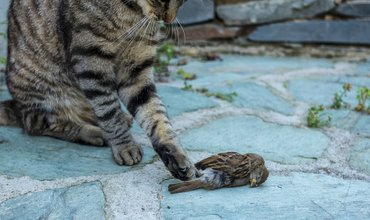
Emmanuelle Baudry, an urban ecologist at Paris-Saclay University, says there are several theories as to why cats bring prey home.
The most prominent theory is rooted in maternal behavior: in the wild, mother cats hunt and bring food back to their kittens. This doesn’t just nourish the young—it gives them the opportunity to practice, play, learn how to hunt, and recognize prey. In this sense, our pets may see us as clumsy kittens who need to be taught how to hunt. But don’t assume this is condescending or patronizing—it’s quite the opposite! By involving us in their daily lives, sharing their prey, and encouraging us to develop “hunting skills,” they are actually expressing love.

Another theory points to safety as a motivation. Cats may feel safer consuming their prey at home than out in the wild. In this case, your home becomes a safe haven where they can hide, store, or peacefully eat their prey.
Returning briefly to the teaching theory—it may also explain why cats sometimes bring live prey home. This behavior is more common in females, whose instincts remain active even if they don’t have kittens. By bringing live animals, your cat might be trying to “train” you—your purring friend wants you to become as skilled at hunting as they are. If you release the mouse, however, you might just annoy them.
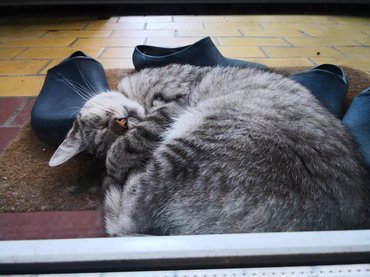
To share a personal story: our cat Dörmi, aka Pici, is quite the skilled hunter. Most often, we’d find dead animals left on the terrace, with Dörmi nowhere to be seen. We never knew if he was secretly watching us to see how we’d react, but based on what we’ve learned, he might’ve been quite upset when we removed his “gift.” Lately, he’s been bringing us live prey and meowing happily as he waits for a reaction. Just the other day, he dropped a live mouse and let it go, seemingly saying, “Okay, now show me what you've got!”
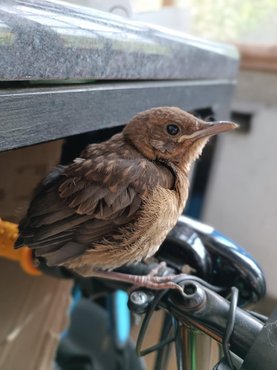
Some cats hunt regularly, while others never do. Researchers have long studied this difference. According to Baudry, hunting tendencies depend on three main factors: the cat’s personality, its environment, and how the owner interacts with it.
A 2023 study published in Ecology and Evolution found that more dominant, aggressive, and active cats brought home more dead animals, while more timid and friendly cats brought home fewer. It was also shown that cats living in rural areas have more opportunities to find prey compared to those in urban settings—so city-dwelling owners are less likely to receive these “gifts.”
Follow us!
facebook instagram
Related articles



7 Reasons Why Cats Arch Their Backs
Life • 4 minutes
How to cut your cat's claws safely
Care • 3 minutes