Scientists Have Discovered Why Cats Love Tuna So Much
Published: 2025. 07. 13. 07:30 -
- Photos: Getty Images Hungary • 3 minutes readingPublished: 2025. 07. 13. 07:30 -
- Photos: Getty Images Hungary • 3 minutes reading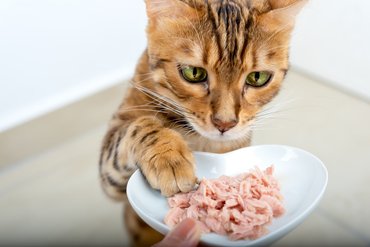
 Set WeloveCatz to appear first in Google search results!
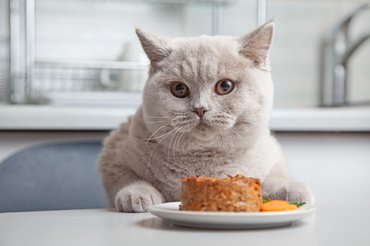
We've never met a cat whose pupils didn't triple in size when offered tuna canned in its own juice. Even the pickiest felines tend to enjoy it. But what’s the reason behind this irresistible attraction?

Researchers have recently discovered why cats are so fond of tuna.
According to a recently published study, cats—like humans—possess umami taste receptors. Umami is one of the five basic tastes, alongside sweet, sour, bitter, and salty. However, unlike human umami receptors, feline receptors bind to two specific compounds that are found in especially high concentrations in tuna. These compounds enhance the umami experience for cats, making tuna extremely appealing to them. Umami gives food its meaty, savory flavor, so it's perfectly logical that an obligate carnivore like a cat would be particularly drawn to it.
Previous research has already shown that cats’ sense of taste differs significantly from that of humans. For example, it’s well known that cats are indifferent to sugar because they simply can’t taste sweetness. This is due to a non-functioning gene responsible for sweet taste perception. Scientists believe that cats lost the ability to detect carbohydrates and sweeteners during evolution, as these nutrients are not essential for their survival.
Similarly, cats have fewer bitter taste receptors than humans. This is likely because bitter taste perception is less important for them than it is for herbivores or omnivores, who need to avoid toxic plants.
Scott McGrane, the lead author of the study, and his team have, for the first time, confirmed that the gene responsible for umami detection, called Tas1r1, is indeed expressed in cats' taste buds. To examine this, scientists dissected the tongue of a six-year-old male cat that had been euthanized due to illness.
In humans, two genes—Tas1r1 and Tas1r3—work together to detect umami. It was already known that Tas1r3 is active in cats, but there had been no clear evidence about Tas1r1 until now. The research revealed that cats do, in fact, possess both genes necessary for detecting umami.
However, when scientists examined how the proteins encoded by these feline genes function, they found significant differences from their human counterparts. The binding sites for glutamic acid and aspartic acid—key to umami detection—show mutations in cats.
It turns out that, unlike in humans, amino acids do not bind directly to cats’ umami receptors. Instead, nucleotides commonly found in meat and yeast first bind to the receptor. Only afterward do amino acids like glutamic acid and aspartic acid amplify the taste sensation. This is the exact opposite of how it works in humans.
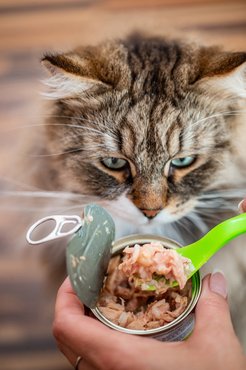
This makes tuna a favorite for cats because it contains the nucleotide inosine monophosphate, which has a strong affinity for the umami binding sight. Tuna also contains large quantities of the amino acid L-Histidine, an essential amino acid for cats and a strong umami enhancer. The L-histidine content of tuna is much higher than the other fish species and meat sources
— McGrane explained to Live Science.
A taste test involving 25 cats confirmed the findings. Researchers placed bowls of water in front of the cats, each containing different combinations of amino acids and nucleotides, along with a control bowl of plain water. The cats consistently preferred the combinations that most strongly activated their umami receptors. This suggests that taste plays an extremely important role in the carnivorous diet of cats.
These discoveries could contribute to the development of tastier cat food and more palatable medication formulas. While it was already known that cats are drawn to meaty, savory flavors, this research provides a brand new molecular-level insight for experts in the field.
Follow us!
facebook instagram
Related articles

7 Reasons Why Cats Arch Their Backs
Life • 4 minutes
How to cut your cat's claws safely
Care • 3 minutes