Why do cats throw themself onto their back?
Published: 2025. 07. 21. 07:30 -
- Photos: Getty Images Hungary • 3 minutes readingPublished: 2025. 07. 21. 07:30 -
- Photos: Getty Images Hungary • 3 minutes reading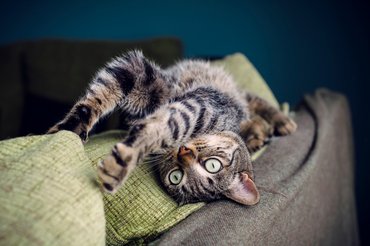
 Set WeloveCatz to appear first in Google search results!
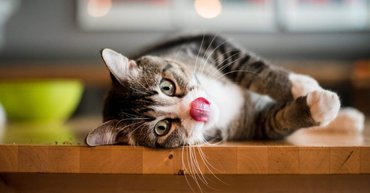
It is characteristic of all our cats that when we arrive home, the first thing they do is roll onto their back and reveal their belly.

They belong to the type who, in such moments, wait for petting, yet not every cat turns onto their back for this reason. From the following, you can find out what the reasons for the behaviour might be.
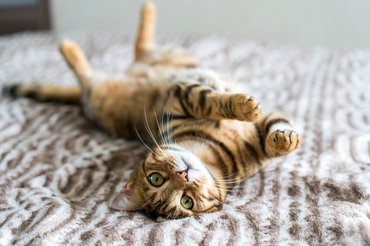
While dogs usually throw themselves onto their back when they display submissive behaviour, in the case of cats this is different; they do this more out of relaxation or to draw attention. The other important factor to mention here is that you should not immediately assume that your pet desires a belly scratch in such a moment. However, if you already know their signs well and are sure that they long for this and enjoy it, then naturally you do not need to hold back.
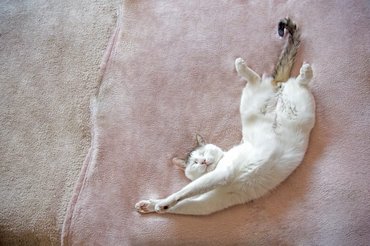
A cat definitely does not reveal their most vulnerable area – their belly – if they do not feel safe. If your little pet often shows their tummy, you can be sure that they feel protected and comfortable.
It is important to observe when, where and under what circumstances the cat turns onto their back. For example, if every morning they throw themselves onto their back in front of you while you are getting ready, that is a sign that they would like attention – the same is true if you observe the behaviour when you get home. If at such times you give attention to your cat, you are, so to speak, rewarding their behaviour, which counts as positive reinforcement. As a result of this, the cat will repeat the rolling next time they want attention. Our tabby companions love routine, so if a pattern develops, the rolling becomes a comfortable, familiar ritual.
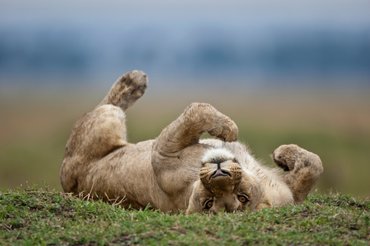
Rolling on the ground can help the cat release pheromones into the environment. Since cats primarily communicate through smells, with the help of glands found in many places on their body, they leave behind unique scent marks. This behaviour has been observed in both domestic and wild cats. Areas marked with these scent marks feel safe and like their own to them, and they also send messages to other cats that they have already been there, have claimed the place – thereby at the same time attempting to keep away foreign animals.
If we observe this behaviour in a sexually mature cat, it may happen that they are in heat. In this case, however, not only the rolling can be observed, but the cat may meow louder, begin to be attracted to males – not necessarily only within their own species – and they may raise their rear with a lifted tail, crawl on the ground, and their vulva may also become more red.
In some sources one can read that nepetalactone found in catnip arouses sexual desire in the cat, and that’s why they begin to roll. However, this statement is not entirely true.
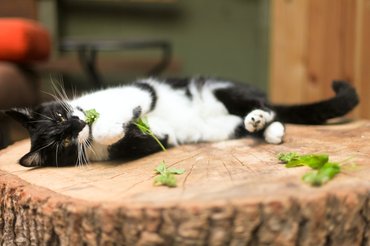
Nepetalactone reaches the cat’s olfactory system through their nose and stimulates areas of the brain sensitive to pheromones – especially those which also regulate behaviour related to reproduction. That is why we can observe rolling, meowing, biting or drooling – patterns which resemble what can be seen in a female in heat. However, in this case these do not indicate real sexual arousal. The effect is not hormonal in origin, but a neurological reflex, and it can occur in males, females and neutered cats as well. So catnip does not arouse real sexual desire, but it stimulates the areas of the brain which also control sexual behaviour.
Follow us!
facebook instagram
Related articles
7 Reasons Why Cats Arch Their Backs
Life • 4 minutes
How to cut your cat's claws safely
Care • 3 minutes