Do Cats Get Bored When They’re Home Alone?
Published: 2026. 02. 01. 07:30 -
- Photos: Getty Images Hungary • 4 minutes readingPublished: 2026. 02. 01. 07:30 -
- Photos: Getty Images Hungary • 4 minutes reading
 Set WeloveCatz to appear first in Google search results!
We are sure that the question raised in the title has crossed every cat owner’s mind at least once—if not regularly.

Below, you’ll learn when cats get bored, what the signs of boredom are, and how you can make up for the hours you spend away from them.
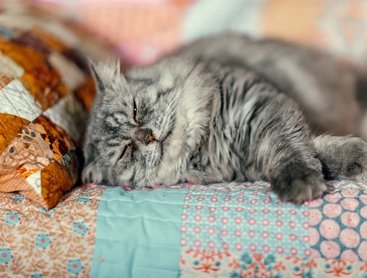
Absolutely, yes. Although our feline companions spend a significant portion of their day napping and grooming—up to 16–20 hours in total—if they have to live the rest of their time in a stimulus-poor environment, without interaction, enrichment, or opportunities to express natural behaviors, they will get bored. Over time, boredom can lead to stress and anxiety, which place serious negative pressure on a cat’s immune system, making them more susceptible to illness. And that’s not even mentioning the mental consequences of this condition.
Cats are extremely intelligent animals that require mental stimulation and physical activity to remain balanced. If a cat has little or no opportunity to engage in natural predatory behaviors (climbing, jumping, stalking, hunting, chasing, etc.), lives in a dull environment, has limited chances for exploration, and lacks sufficient social interaction and movement, you can be sure that boredom is part of their everyday life.
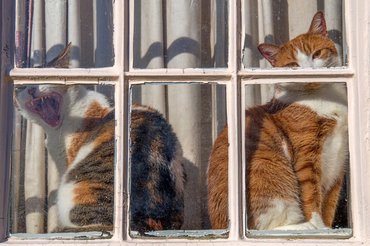
It’s also important to point out that, contrary to popular belief, domestic cats are not truly solitary animals. As experts explain, one of their remarkable traits is social flexibility—the ability to adapt to different situations. However, if we observe a colony of feral cats, we can immediately see that although the animals are loosely connected and may go their separate ways when resources are scarce, they generally feel safer in larger groups. Among colony members, we can observe behaviors such as sleeping together, sharing food, and grooming one another—all clear signs of social behavior. This is something we must take into account in domestic cat care as well. Even though every cat is an individual, species-specific traits will still apply to some extent.
It’s important to note that these behaviors can also indicate illness, so the very first step should always be a visit to the veterinarian.
It depends. If you spend enough quality time with your cat in the right way when you’re home, and you make sure they have things to occupy themselves with while you’re away, then no. However, if your cat already lives in a stimulus-poor environment and you don’t dedicate quality time to them even when you are home, boredom is guaranteed. It can also be stated that the latter situation clearly borders on animal cruelty, since responsible pet ownership requires providing appropriate living conditions (food, water, exercise, rest) and taking species-specific needs into account.
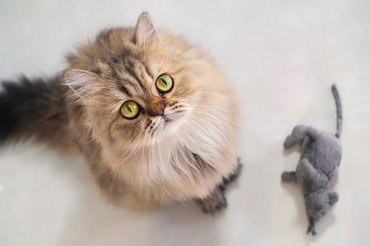
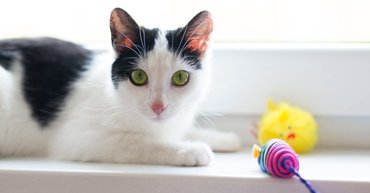
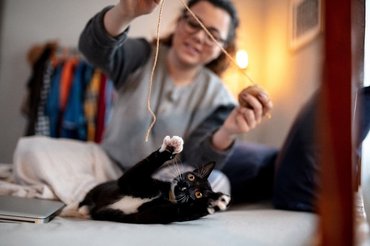
The first and most important step is to dedicate around 4×10 minutes a day to interactive play—meaning playtime together. (This amount can be increased or slightly reduced depending on the individual cat’s needs, for example in the case of illness or old age.) Interactive play works best when it simulates the thrill of hunting. You can use feather wands, wind-up mice, play fetch with their favorite toys, or even use a laser pointer—of course, in the right way. One of our readers shared that he scatters or hides 10–15 pieces of kibble every day in the room where his cat Boszi spends the most time. Searching for them keeps the hunter occupied for long minutes. You can even teach your cat to walk on a leash, allowing you to go on outdoor adventures together.
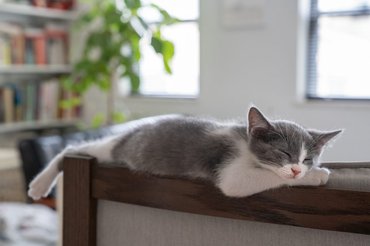
We also recommend getting food puzzles, lick mats, or even making a sniffing mat. These can be used even when you’re not at home. It’s also worth investing in cat furniture that allows your cat to climb higher—this can be a cat tree or wall-mounted shelves just for them. If possible, let your cat sit on window sills and make their favorite spot more comfortable with a soft blanket or cushion. From there, they can safely watch the world go by.
If your cat enjoys watching TV or responds positively to the sound of the radio, you can leave it on during the day. In many cases, this can also help with separation anxiety—just as it does for dogs.
Finally, but not least, you might consider adopting a second cat so they never have to be alone. Of course, this is a major and highly responsible decision that requires knowing your cat’s personality and preferences, as well as your own possibilities and limitations.
Follow us!
facebook instagram
Related articles

7 Reasons Why Cats Arch Their Backs
Life • 4 minutes
How to cut your cat's claws safely
Care • 3 minutes