Who Were the Cat’s Meat Men?
Published: 2025. 11. 01. 07:30 -
- Photos: Getty Images Hungary • 2 minutes readingPublished: 2025. 11. 01. 07:30 -
- Photos: Getty Images Hungary • 2 minutes reading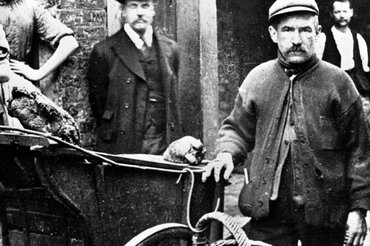
 Set WeloveCatz to appear first in Google search results!
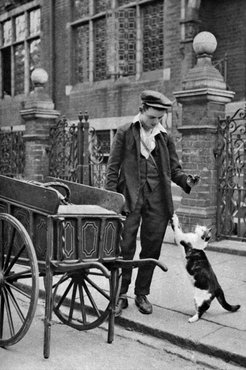
Indeed, it was — and quite a spectacle, too! The cat’s meat men were a familiar sight in their time, and their goods were in high demand.

But before we dive into this fascinating chapter of history, let’s clear up a common misunderstanding: the cat’s meat men did not sell cat meat — they sold meat for cats. Feeling relieved? Understandable! That certainly puts their popularity in a different light. They could mainly be found in London and other large cities from the 1800s up until the 1930s.

At that time, almost every major city had slaughterhouses that inevitably produced waste — trimmings, scraps, and contaminated meat unfit for human consumption (for example, meat covered in flies). This was what the cat’s meat men sold to cat and dog owners. They were peddlers, just like many other tradesmen of the era, pushing their small carts or barrows through the streets. According to contemporary records, they had a remarkably large clientele — unsurprising, given that estimates suggest several hundred thousand “companion animals,” as we would call them today, lived in London alone.
To prevent misuse — namely, people trying to resell the meat for human consumption — the scraps were often dyed blue or green. What kind of dye was used, and whether it was harmful to the animals, remains unknown.
The following photo was taken around 1901–1902 in London’s East End. It shows a cat’s meat man making his rounds with a wheelbarrow. The image was captured by John Galt, who arrived in London in 1890 and, as a missionary for the London City Mission, sought to depict the true face of the East End through his photography.


To wrap up, here’s a quick summary of how best to feed your cat with meat. If you want to supplement store-bought food with real meat, it’s best to cook it rather than serve it raw — this helps prevent infections such as salmonella. There’s no need for seasoning; in fact, spices can be harmful to cats. Plain, boiled meat is a delicious and safe treat!
Be careful with bones, especially brittle chicken bones, as their sharp splinters can cause injuries or choking. If you give your cat fish, always remove the bones for the same reason.
And, of course, the old belief that spoiled or contaminated meat is “still fine for pets” is completely outdated. Cats are just as vulnerable to pathogens and contamination as we are.
Follow us!
facebook instagram
Related articles
7 Reasons Why Cats Arch Their Backs
Life • 4 minutes
How to cut your cat's claws safely
Care • 3 minutes