Cats Meow Twice as Much at Men as at Women
Published: 2026. 01. 19. 07:30 -
- Photos: Getty Images Hungary • 3 minutes readingPublished: 2026. 01. 19. 07:30 -
- Photos: Getty Images Hungary • 3 minutes reading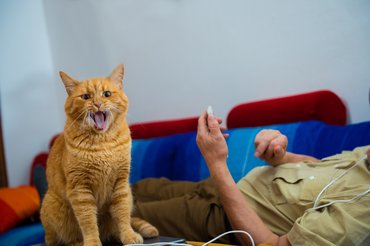
 Set WeloveCatz to appear first in Google search results!
The study, led by a research group from Ankara University (Turkey), was based on video recordings made by 31 cat owners. Each participant recorded how their cat reacted when they arrived home, while they were instructed to behave as naturally as possible.

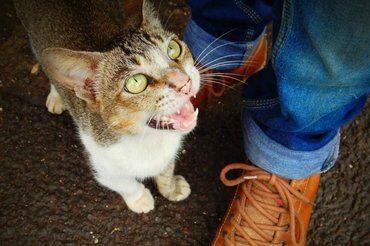
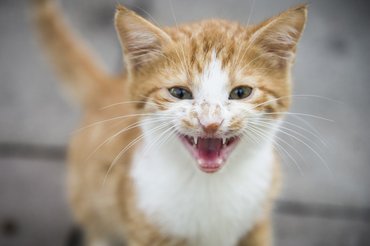
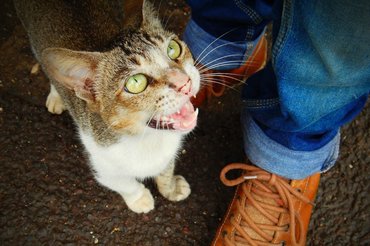
According to the results, male owners received an average of 4.3 vocalisations (meowing, purring or chirping) in the first 100 seconds after entering through the door, whereas for female owners this average was only 1.8. This is a significant difference, and it was not influenced by the cat’s age, sex or breed. According to the researchers, this is why cats may meow more at men.
During the tests, the researchers examined a total of 22 different behaviours, including yawning (which is often a sign of stress in cats) as well as food-related behaviours (such as visiting the food bowl). Vocalisations were the only type of behaviour that differed according to the owner’s gender.
Two groups of behaviours typically appeared together: social behaviours (such as an upright tail and rubbing against the owner), and so-called displacement behaviours (body shaking, scratching). According to the researchers, this suggests that cats are able to send several different signals at the same time when greeting someone. Vocalisations did not show a close correlation with either behaviour group, which suggests that this is a separately managed form of signalling and is not necessarily linked to other factors examined in the study, such as hunger or whether the cat had missed their owner.
Although the study involved a relatively small number of cat owners from a single country, its advantage is that it is based on recorded video footage, which makes it more reliable than many pet studies that rely solely on owners’ reports.
Although the researchers did not examine in depth in this study why cats meow more at men, they suggested a few possible explanations: women generally paid more attention to cats, were better able to assess the animals’ emotions, and were also more likely to imitate the cats’ vocalisations.
It is therefore possible that male caregivers require more explicit vocalizations to notice and respond to the needs of their cats, which in turn reinforces cats' tendency to use more directed and frequent vocal behavior to attract their attention– the researchers write.
As they explained, based on the results we can conclude that cats’ greeting behaviour is multi-channel, meaning that it can reflect different emotional states and motivations, and, as can be seen, it is also influenced by the carer’s gender.
This is an important piece of research, as it expands our knowledge about cats’ meowing. Our pets are able to use meowing to draw our attention, express affection, or signal dissatisfaction. What’s more, it also suggests that cats are not nearly as indifferent to human attachment as they sometimes seem.
By the way, attachment and bonding! Click here to explore the signs that show your cat is attached to you.
Follow us!
facebook instagram
Related articles
7 Reasons Why Cats Arch Their Backs
Life • 4 minutes
How to cut your cat's claws safely
Care • 3 minutes