Video shows a fox and a cat sharing dinner
Published: 2025. 11. 30. 07:30 -
- Photos: Getty Images Hungary • 3 minutes readingPublished: 2025. 11. 30. 07:30 -
- Photos: Getty Images Hungary • 3 minutes reading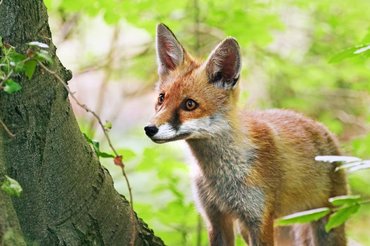
 Set WeloveCatz to appear first in Google search results!
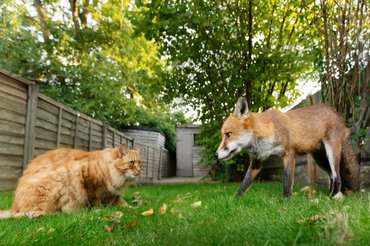
When two worlds meet, something special is bound to happen. This time, we get to witness a fox and a cat sharing a meal. The two animals, sitting side by side, both seem determined to claim the tastiest bite for themselves. The scene is both surprising and thought-provoking.

Food is often the strongest source of motivation in the animal kingdom, and foxes and cats are no exception. In the video below, a hungry fox and a brave house cat come face-to-face when they both set their eyes on the same dinner. Within moments, the situation turns into a kind of “dinner showdown,” perfectly illustrating how instinct, curiosity, and courage play out when food is at stake.
But what happens when the wild meets the domesticated? In this article, we explore how animal behavior and food-driven motivations can be compared and understood side by side.
Many animal behaviors — including territorial defense and access to food — are closely tied to survival and everyday success. When it comes to protecting their territory or food sources, animals will readily confront intruders. A study published in BMC Ecology and Evolution, which examined ant colonies, found that competition over a food source intensifies when that resource is highly valuable. The more desirable the reward, the stronger the conflict can become. So when a fox and a cat both set their sights on the same dinner, these instinctive mechanisms are very likely activated: “Who gets it?” “Whose bite is it?”
It’s not just a matter of “who gets it,” but also how the animal approaches the situation: through fighting, avoiding, or waiting. A study published in Scientific Reports showed in rodent experiments that in mild conflict situations, the dominant individual consistently accessed more food than the subordinate one.
This can also matter when a fox and a cat cross paths, since their initial behavior toward each other can set the tone. This doesn’t necessarily mean physical fighting; behavioral strategies are just as important. In the rodent study, the mild conflict involved only one animal at a time being able to access a feeder containing tasty pellets. This led to asymmetrical social interactions in which one animal consistently consumed more food — a reliable predictor of hierarchy.

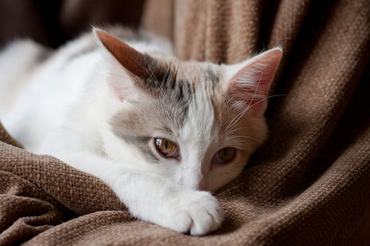
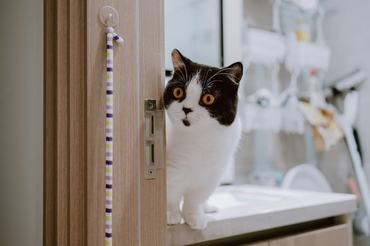
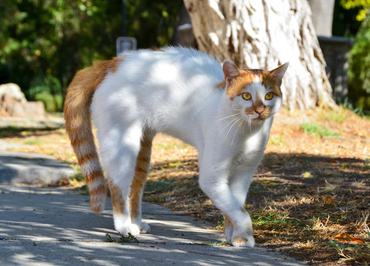
In our video, for example, the darker-colored cat immediately backs away and ends up getting none of the tasty bites. By contrast, the calico cat (likely on its own territory, feeling confident) behaves dominantly toward the fox. As a result, the fox never settles down comfortably to eat; instead, it snatches quick bites from the bowl whenever its rival allows it.
This behavior is unsurprising. Cats are famously territorial and will boldly defend what they consider theirs — even against larger animals. From the fox’s perspective, caution is sensible: a cat’s sharp claws pose a real threat despite the size difference.

Access to food does not always result in competition. In some situations, animals draw upon their adaptive, social abilities. A 2025 Nature study examining food-sharing behavior in street dogs found that when food was available in larger “patches,” dominant animals were more likely to allow group members access. Rapid conflict avoidance can therefore be an adaptive behavior — and it appears in the fox-cat dinner standoff as well. As time goes on, once the cat has likely eaten enough and realizes it won’t go hungry, it becomes less motivated to chase the fox away entirely.
Follow us!
facebook instagram
Related articles
7 Reasons Why Cats Arch Their Backs
Life • 4 minutes
How to cut your cat's claws safely
Care • 3 minutes