Mummified Saber-Toothed Cub Discovered in Russia: This Is What the Ancient Big Cat Looked Like
Published: 2025. 12. 14. 07:30 -
- Photos: Getty Images Hungary • 3 minutes readingPublished: 2025. 12. 14. 07:30 -
- Photos: Getty Images Hungary • 3 minutes reading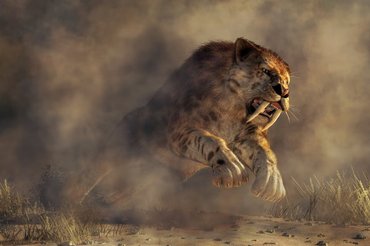
 Set WeloveCatz to appear first in Google search results!
The mummified remains of a saber-toothed cat have been unearthed during an excavation in Siberia. The ancient predator looked quite different from what earlier finds had suggested.

The saber-toothed cat that has excited the scientific community may have died 35,000 years ago. The discovery is particularly intriguing because the remains do not belong to an adult specimen, but to a cub that became naturally mummified thanks to the cold air. This is what the mummified saber-toothed tiger looked like!
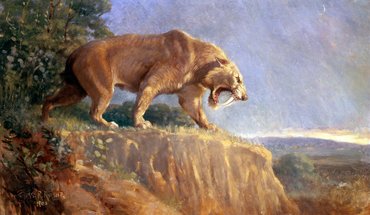
The head, upper body, limbs and part of the pelvis of the ice-embedded specimen all became mummified. The small cub was discovered in northern Russia, in Yakutia, along the banks of the Badyarikha River. The find is especially significant because this is only the second time that a specimen belonging to the species Homotherium latidens has been uncovered during excavation. The first remnant attributed to this species—a partial jawbone—was previously found in the North Sea.
Individuals of the saber-toothed cats, which went extinct about 10,000 years ago, lived in Eurasia during the late Pleistocene. Radiocarbon dating shows that the cub lived sometime between 35,471 and 37,019 BCE.
At the time of its death, it was only about three weeks old.
Researchers compared the remains to modern lion cubs of a similar age. The results showed that compared to its later relatives, this cub had a much stockier neck, longer forelimbs, and smaller ears. Differences appeared in the mouth as well—the saber-toothed cub could open its jaws much wider than modern lion cubs.
Its round toe pads were adapted specifically for moving easily in snowy, icy environments, suggesting that the species evolved for long-term survival in cold climates. Scientists also assume that its hunting strategy may have been quite different from that of other large contemporary felids.
CT scans confirmed the characteristics typical of the Machairodontinae subfamily, particularly the genus Homotherium
– the researchers concluded.
The tiny saber-toothed tiger’s teeth also supported this: its cone-shaped incisors stood out clearly from the rest of the dentition. Its skull was larger than that of modern lion cubs, and it had a wider zygomatic arch. Comparative measurements show that the Homotherium cub’s skull and forelimbs were proportionally larger than those of a similarly aged lion cub, reinforcing the idea of a unique developmental trajectory.
Homotherium latidens once lived across Eurasia, Africa, and the Americas during the Plio-Pleistocene. Homotherium finds from the late Pleistocene typically come from North America, and remains of another species, H. serum, have been described from more than 30 sites. Genetic analysis now shows that the jawbone previously found in the North Sea is genetically identical to H. serum. This leads researchers to wonder whether the remains recovered from North American sites might also belong to this same species.
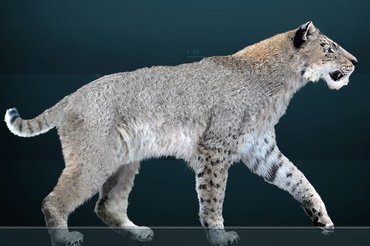
Researchers believe that the cub mummy will expand knowledge about the species' range and provide valuable data on its physical characteristics and adaptability. According to current studies, saber-toothed cats that lived from the early Pliocene to the late Pleistocene were exceptionally skilled hunters. Their long forelimbs allowed them to pursue their prey over long distances with endurance, while their dentition enabled them to tear skin, flesh, and tendons from bone with ease.
Thirteen different subspecies have been identified worldwide so far, though most finds have been incomplete. The differences between subspecies are reflected primarily in their size, dentition, and limbs. Interestingly, modern leopard-like felids also show similarly pronounced differences between subspecies.
Follow us!
facebook instagram
Related articles



7 Reasons Why Cats Arch Their Backs
Life • 4 minutes
How to cut your cat's claws safely
Care • 3 minutes