It All Depends on Whether It’s a Good or Bad Idea to Sleep with Your Cat
Published: 2025. 10. 18. 07:30 -
- Photos: Getty Images Hungary • 4 minutes readingPublished: 2025. 10. 18. 07:30 -
- Photos: Getty Images Hungary • 4 minutes reading
 Set WeloveCatz to appear first in Google search results!
One of the most divisive questions among pet owners is whether it’s better to sleep together with your furry friend or separately. Scientists have both pros and cons to argue for and against sharing your bed. Let’s take a closer look at what they are!

Let’s start with what might be bad news for many pet parents: co-sleeping can actually lead to sleep disturbances. According to Melissa Milanak, a sleep health expert and professor at the Medical University of South Carolina, most of her patients report that their pets often disturb their sleep at night. “It’s not something we can say is universally bad, but many people do report a negative impact on their sleep,” she explained. On the other hand, some owners say the exact opposite — that having their four-legged companion nearby helps them feel calmer and more secure. So how can these opposing experiences both be true?

Since our pets’ natural sleep cycles differ from our own, that can cause nighttime disruptions. While most dogs are light sleepers and tend to wake up several times a night, cats are typically active at dusk and dawn. Many experience what’s known as the “zoomies” — sudden bursts of energy — during these hours. When your cat wakes up, it may start pacing, scratching, drinking, or playing, disturbing your sleep in the process. Experts point out that this restless activity can prevent deeper sleep phases even if you don’t fully wake up.
Some pets, however, adapt perfectly to human sleep rhythms and sleep soundly through the night, waking only if something unusual happens around them. The picture becomes more complex when you consider whether the cat or dog sleeps in the bed, merely in the room, or whether it can freely leave when it wants to. In the latter case, your sleep might be safer — your pet can simply leave instead of waking you.

Along with their fur and saliva, animals can carry dirt, dust, plant matter, pollen, parasites, and microbes into the bedroom — and even into your bed — all of which can harm your health or make restful sleep impossible if you have allergies. Outdoor cats roam everywhere: from dusty attics to cobwebbed basements where mice and even rats pass through, and they’ll likely explore the chicken coop too if there’s one nearby. Just think about everything that might end up on their paws! If you sleep with your cat, make sure it’s clean before it’s allowed into the room or onto the bed.
Brian Chin, professor of social and health psychology at Trinity College in Connecticut, has pointed out that research shows sleeping with pets is linked to poorer sleep quality and even insomnia. However, many pet owners underreport these issues because they feel it might cast a negative light on their beloved companion — and they don’t want to complain about them.
“I hate to admit that my cat even bothers my sleep,” Chin confessed, explaining that one of his cats keeps him awake while the other leaves him alone. He also noted that the more pets someone has, the greater the sleep disturbance tends to be.

Researchers admit this is a tricky topic — many pet owners would rather sacrifice their own rest than damage the bond they have with their pet by kicking them out of bed. But would that really harm the relationship?
If your pet is used to nightly cuddles, it would likely take it hard if suddenly banned from the bedroom. You can try creating some distance gradually — for instance, by placing a pet bed next to yours. Another option, as mentioned earlier, is to leave the bedroom door open so your cat can come and go freely. You can also try adjusting your bedtime routine to your pet’s rhythm — going to bed earlier can make early wake-ups less draining. Cats tend to take breakfast time seriously and prefer it as early as possible.
Sharing your bed with a pet also means changing your bedding more frequently — which can contribute to more comfortable, cleaner sleep.
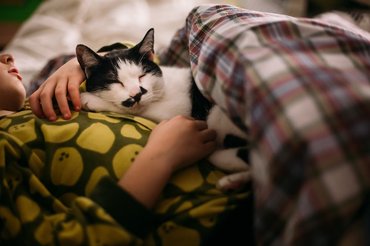
That said, some cats don’t disturb their owners at all and truly do make the night more peaceful. If you’re among the lucky ones, feel free to share your bed with your feline friend and enjoy the bond of trust — along with the cozy warmth of a purring, furry bed partner.
Follow us!
facebook instagram
Related articles



7 Reasons Why Cats Arch Their Backs
Life • 4 minutes
How to cut your cat's claws safely
Care • 3 minutes