How to befriend a cat as quickly as possible
Published: 2026. 01. 26. 07:30 -
- Photos: Getty Images Hungary • 5 minutes readingPublished: 2026. 01. 26. 07:30 -
- Photos: Getty Images Hungary • 5 minutes reading
 Set WeloveCatz to appear first in Google search results!
Sometimes it can be difficult to befriend a cat, but the end result is definitely worth the time, energy and patience invested in building trust.

Whether it’s your own cat or a feline who arrives together with a new relationship, people usually strive to create a more harmonious bond with the animal as quickly as possible. Even though everyone knows cats are independent by nature, it can be painful when a whiskered companion who matters to us repeatedly rejects our attempts to get closer. In such cases, it’s worth taking a step back and thinking about why the cat is so distant with us. Is this simply their nature, or are we doing something wrong? Below, we’ll help you uncover the root of the problem and share a few tips on how to befriend a cat.

If we’ve established that the cat is only hostile towards us, while otherwise relatively sociable, it’s important to think about what might be causing this. If a cat arrives alongside a new romantic relationship, jealousy may come into play – but we shouldn’t place all the blame on the cat. Very often, the issue doesn’t lie in the cat’s temperament but, difficult as it may be to accept, in our own behaviour and lack of understanding.
If you do the things they like and stay out of their personal space, you can win a cat over.
Unfortunately, the average person’s knowledge of feline communication is fairly limited. Most people know that when a cat purrs, they’re likely happy; that meowing is usually meant to get a human’s attention; and that hissing signals they’ve had enough. Even these interpretations oversimplify a tabby’s communication – after all, hissing alone can have many different causes – but they’re still a good starting point. That said, in many situations they’re not enough. We won’t go into every tiny detail of cat body language here, but we’ll highlight a few useful cues.

If a cat approaches you with their ears forward, tail held up loosely with the tip curved like a hook, they’re very likely approaching with friendly intentions and seeking interaction. If, however, the cat keeps their distance, swishes their tail back and forth, and holds their ears to the side or backwards, it’s best to keep your distance.
Knowing the signals described above, it’s worth considering how much attention we actually pay to a cat’s communication. It’s also important to reflect on how well we respect their boundaries. Do we constantly pick them up or stroke them without asking? Do we stay in their personal space even when it’s obvious they don’t want us there? All of these can irritate the cat and hinder the development of a better relationship.
As a first step, simply paying attention to these cues – and approaching or backing off accordingly – can already make a big difference. We recommend always letting the cat initiate contact, and only touching them when it’s clearly comfortable for them. If you don’t just want a conflict-free relationship but genuinely want to befriend a cat, the following tips will greatly improve your chances.

One of the most important things you can do is respect a cat’s personal space. Let them approach you, or if you really want to, you can try gently calling them over or tempting them with a few tasty treats. But don’t be pushy: don’t suddenly pet them without any signs of consent, and definitely don’t just scoop them up. Over time, they’ll approach on their own if they feel safe around you.
Don’t make a big deal out of it if they approach you – especially at the beginning, this can scare off a more timid or distrustful cat. Stay calm and avoid being too loud; this makes it more likely that the cat will choose to come closer.
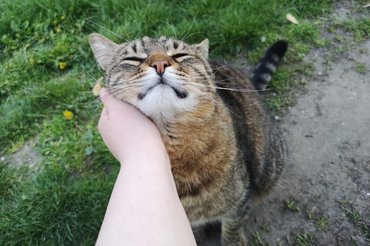
When it comes to handling an approach properly: extend your hand towards the cat, not too close, with your palm facing upwards and relaxed. If they rub their face against you, they likely won’t mind being stroked — but be slow and always watch their signals. If they sniff your hand and then retreat, you should retreat too and wait for them to seek contact again. If they walk away or stay nearby but don’t allow petting, respect that and move at their pace.
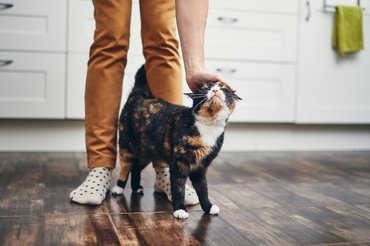
As should already be clear, cats like to move at their own pace, and this applies to eye contact as well. Until trust is fully established, they don’t appreciate being stared at, and especially not direct eye contact, which they may perceive as threatening – hardly the best first impression. Later on, once trust has formed, the rules around eye contact may change.
Interestingly, cats do like slow blinking, and it can help build trust even in the early stages of a relationship. Some say this gesture is the feline equivalent of a smile. So if you happen to catch a cat’s gaze, it’s worth trying this tactic. Who knows – it might be exactly what helps you befriend a cat.
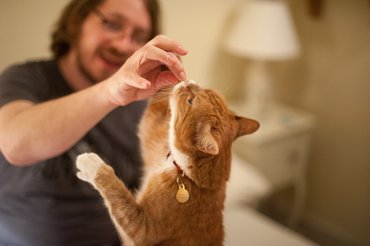
Quite literally. A few tasty treats can help them let you get closer and, over time, begin to trust you. Give them a treat, then try to stroke them – briefly and gently; one or two strokes are enough. After a while, you can reverse the order: stroke the cat first, then offer a treat. If you do this regularly, the cat will inevitably associate the two, and will not only allow but may even enjoy being petted. Once your relationship is strong enough, you can gradually reduce – and eventually stop – the treats that accompany petting
If you’re using treats to win a cat’s heart, make sure not to overfeed them. Extra weight can quickly creep up on a less active cat, which can be harmful to their health in the long run.
Follow us!
facebook instagram
Related articles




7 Reasons Why Cats Arch Their Backs
Life • 4 minutes
How to cut your cat's claws safely
Care • 3 minutes