Is It Normal If a Cat Never Purrs?
Published: 2026. 02. 07. 07:30 -
- Photos: Getty Images Hungary, welovecatz.hu • 3 minutes readingPublished: 2026. 02. 07. 07:30 -
- Photos: Getty Images Hungary, welovecatz.hu • 3 minutes reading
 Set WeloveCatz to appear first in Google search results!
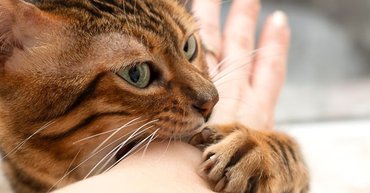
You’ve probably experienced it yourself: even when you pet an unfamiliar cat, you almost immediately wait for the little engine to start purring. After all, if a cat doesn’t purr, something must be wrong—or at least they’re not enjoying the petting or the time spent together.

Yet there are cats who don’t purr at all, or only very rarely. And in most cases, this is perfectly normal—we’ll explain when you should start to suspect a problem.
Before answering the question raised in the title, let’s first clarify what purring really signifies. Even non-experts know that this sound usually expresses a cat’s happiness and contentment. This is true—but it’s not the whole story. Cats may also purr when they are sick or stressed, as they often use purring as a self-soothing and even self-healing mechanism.
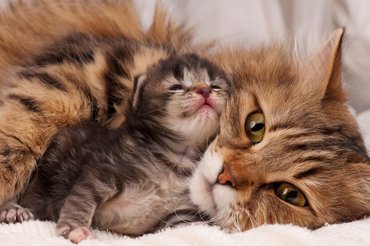
Kittens are born blind and deaf, and the vibrations produced by their mother’s purring help them find warmth and food. Purring is therefore a survival tool from the very beginning. Scientists also believe that it releases endorphins, which aid in self-calming.
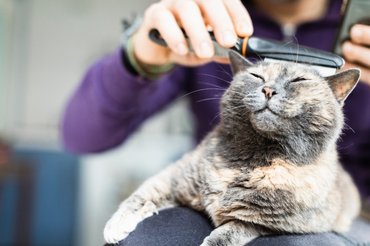
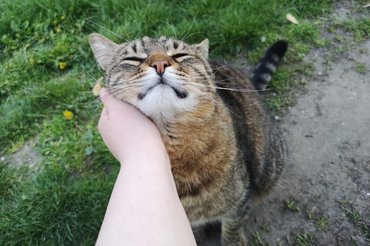
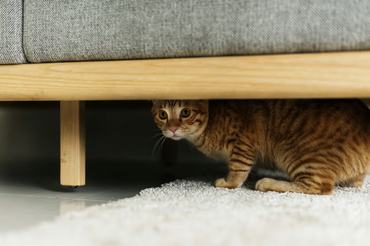
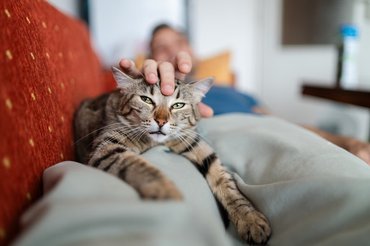
If you want to understand why your pet is purring at a given moment, pay attention to their body language and the situation itself. If your cat is hiding, clearly disturbed by touch, not eating, yet still purring, you can be sure it’s not because they are content. On the other hand, if they are lying comfortably next to you or curled up in your lap while purring, there’s a good chance they’re enjoying your company and the petting.
It’s also important to remember that cats learn easily. If your pet has noticed that you respond positively to purring—with more petting, praise, or even treats—they will likely use this “technique” more often and purr more frequently.
My grandmother’s cat, Ferdinánd, purrs for almost no one except my grandmother. Even when he clearly enjoys being petted, picked up, or played with, he rarely purrs. And when he does, it’s very quiet and restrained.
As veterinarian Dr. Sarah Elliott explains, cats have not been domesticated for nearly as long, in evolutionary terms, as dogs. The wild ancestors of cats lived solitary lives and did not need to communicate with one another or develop sophisticated vocal signals—they were mostly silent, except when communicating with kittens or during mating season. For this reason, the absence of purring can easily be completely normal behavior for a particular cat. And this brings us back to Ferdinánd: in his case, there is strong suspicion that he has wildcat blood in his veins. Of course, this doesn’t mean that only cats with direct wildcat ancestry may lack purring; it’s simply an interesting connection in his case.
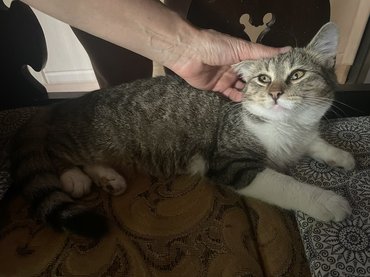
Every cat is different—different personality, different past, different experiences. It’s possible that your pet communicates in other ways and that purring simply isn’t part of their repertoire. They may express themselves more through meowing or other vocalizations, or they may show happiness through rubbing against you, grooming, or seeking your company.
However, if your cat used to purr regularly and then suddenly stopped, it’s worth taking them to the veterinarian, as an underlying health issue may be present. It’s also possible that some change or external factor is causing stress, leading to anxiety or nervousness—and as a result, the purring stops.
So if your cat has never purred or only does so very rarely and shows no signs of physical or mental health problems, you can be fairly certain there’s no need to worry—though you can always ask your veterinarian’s opinion during a routine check-up. If, however, your cat used to purr happily and then suddenly stopped, we definitely recommend consulting your vet.
Follow us!
facebook instagram
Related articles
7 Reasons Why Cats Arch Their Backs
Life • 4 minutes
How to cut your cat's claws safely
Care • 3 minutes