Why Do Cats Wag Their Tail? It Does Not Work Exactly Like With Dogs
Published: 2025. 08. 25. 07:30 -
- Photos: Getty Images Hungary • 4 minutes readingPublished: 2025. 08. 25. 07:30 -
- Photos: Getty Images Hungary • 4 minutes reading
 Set WeloveCatz to appear first in Google search results!
Have you already observed that your kitty often moves their tail as if they wagged it? This body language has several meanings.

As an owner it is very important that you exactly understand what your favourite would like to communicate to you. When your cat moves their tail to and fro, with that depending on the situation they send you a message. Let us go through, when what!
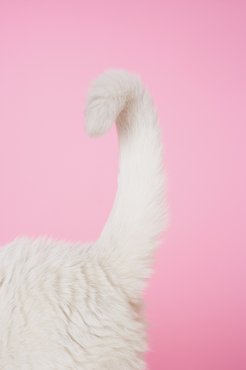
One important thought in the case of our pets is that it is possible to draw a parallel between dogs and cats, since they have similar characteristics, but in many areas of life they work differently. So, it is also in the case of communication happening with their tail: there are similar motives, but certain things are characteristic only of the cats.
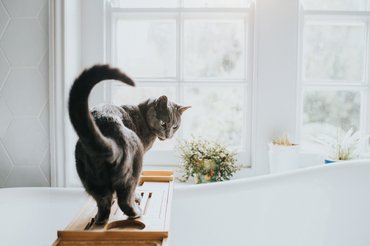
As with the dogs wagging can be the expression of happiness, so too the cat may move their tail in their satisfaction. It is frequent that our purring favourites also wait for us in the door after work, and at such a time they not only meow rubbing against our leg, but even wag their tail as well. At such a time you can contentedly note that your favourite is extremely glad for you. But do not despair either, if this does not happen, since not every cat communicates in the same way. It may be that your kitty begins to purr, or asks up into your lap, perhaps makes eye contact with you. These are all signs of love and attachment.
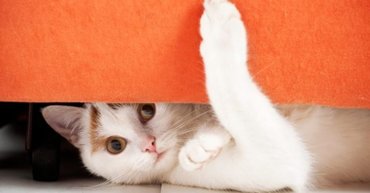
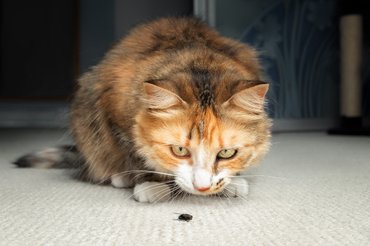
You may also observe that the cat wags their tail during hunting, even if it is an indoor kitty. At such a time the prey is not a mouse, but their toy, or even a rag dropped onto the floor. When the animal is preparing to strike, then their body flattens to the ground, their whole hind section, so their tail as well may move to and from quickly, rhythmically, it can be seen on them that with their every fibre they concentrate. As long as they do not thus target your ankle or another of your cats, then let them live out their instincts!
Cats also use their urine for territory marking. Spraying is chiefly characteristic of tomcats (the females do it as well), when they raise their tail, then by vibrating it they urinate onto the object to be marked. At such a time the movement of their tail is describable less as wagging, rather as quick vibration.
There are times when the cat wags their tail because they are nervous, or something stresses them. The movement of the tail at such a time is slower, more forceful, than when the animal is happy. In the background may stand, if someone against their will begins to stroke your favourite (with guests it is frequent that they want to make friends like this, wrongly), but you can also anger them if you do not allow them to jump up onto the table. At such a time mostly it is enough if you leave the cat alone, who will shortly calm down. But if you often observe the symptoms of stress on your favourite, about that already one must speak with the vet. Constant tension in time can bring about physical problems.
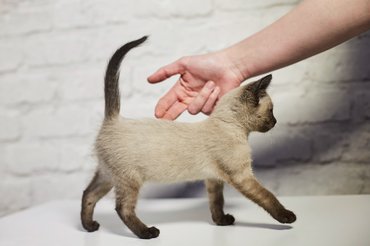
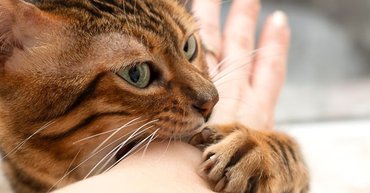
The angry cat also with their tail warns that shortly they prepare for attack. This is not the already mentioned hunting narrative, much rather self-defence. For example, if someone does not take seriously the animal’s signals, and keeps on stroking, cuddling them. Warning sign is, if the tail with big swishes goes to and fro on the floor, generally pressed tightly to the floor. Generally dilated pupils and flattened-back ears also accompany the tail movement. It is clear that at such a time the cat must be left alone.
Follow us!
facebook instagram
Related articles
7 Reasons Why Cats Arch Their Backs
Life • 4 minutes
How to cut your cat's claws safely
Care • 3 minutes