


This Is What the Cat of the Future Will Look Like
Published: 2025. 09. 20. 07:30 -
- Photos: Getty Images Hungary • 4 minutes readingPublished: 2025. 09. 20. 07:30 -
- Photos: Getty Images Hungary • 4 minutes reading
Cats have been evolving on Earth for around 37 million years, originally in a world without humans. It was only in the last 10,000–15,000 years that they emerged from the shadows of dense forests to join us and adapt to a different way of life. Physically, domestic cats differ relatively little from their wild relatives. Genome sequencing has revealed that the domestic cat shares 95.6% of its genome (the complete set of hereditary information encoded in DNA) with the tiger. Most cat breeds are barely 200 years old and are fairly uniform in size and body structure. This only further highlights how recent a phenomenon cat domestication really is.

In the following, we will explore how cat breeds developed and what we can expect in the future when it comes to changes in the species and its breeds.
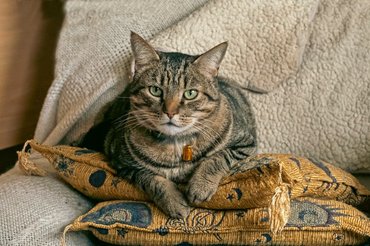
Current research suggests that the oldest cat breed is likely the Egyptian Mau, which arose naturally about 3,000 years ago. Close behind it are several other breeds thought to be thousands of years old, such as the Abyssinian, Turkish Van, Norwegian Forest Cat, Japanese Bobtail, Thai, and Siamese. But we are not short on modern breeds either — for example, the Burmilla has a history of just 30 years.
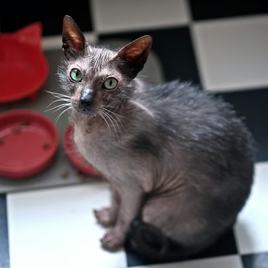
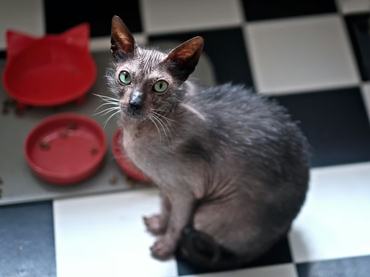
Unlike dog breeds, which often differ significantly in their instincts and temperament, cat breeds are primarily — though not exclusively — distinguished by their appearance. Breeders are still actively creating new varieties, including hybrids between domestic cats and wildcats. The reason for this, however, is not functional. A cat does not need to perform a particular task — there is no such thing as a “working cat” — and we see them almost exclusively as pets. If they are kept for pest control on a farm or in a household, they do not need to be purebred; it is enough that they have good instincts and do the job naturally.
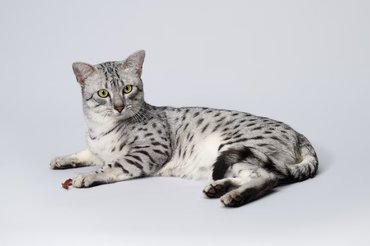
When Scandinavian archaeologists compared the size of cat pelts from the Viking Age to modern cats, they found that 21st-century cats are 16% larger. This is particularly striking because domestication typically reduces the size of animals. Dogs, for instance, are about 25% smaller than wolves, and livestock such as cattle, sheep, and goats are also smaller than their wild ancestors.
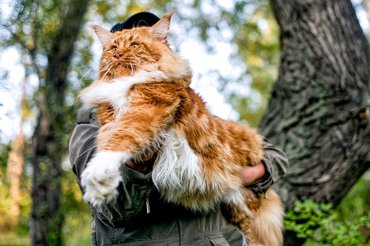
And it isn’t just the abundance of nutrient-rich kibble that has led to bigger cats. Scientists have documented increased body size in free-roaming and feral cats in the Australian outback as well. While these cats may occasionally steal human food scraps, they are not regularly fed by people. Of course, cats are not going to grow to Godzilla size, nor will they suddenly develop thumbs — but there is a strong likelihood that they will continue to grow larger over time.
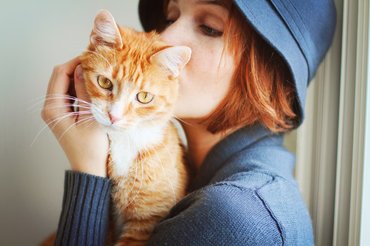
Experts also agree that cats are likely to become even friendlier in the future, thanks to their constant contact with humans. Through natural selection, friendlier individuals are more likely to approach humans — whether naturally or through selective breeding — and thus are more likely to pass on their social genes to their offspring.
Even though cat lovers often emphasize how much they value and appreciate the species’ independence, deep down, we still want to form a closer bond with our pets — and friendliness is essential to that.
When scientists compared the social behavior and personality of domestic cats with clouded leopards, snow leopards, African lions, and Scottish wildcats, they found that our pets are not naturally inclined toward group living. They tend to be dominant, neurotic, and impulsive. However, the domestic cat’s personality most closely resembles that of the social African lion, which suggests that cats have the potential to become even more social in the future. While large cat colonies are not the same as lion prides, the lion is proof that under the right circumstances, cats can live alongside one another.
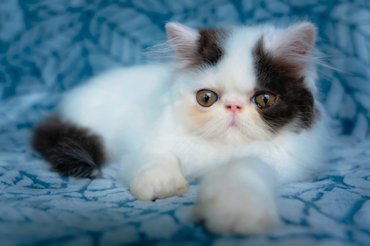
The massive international project called Darwin’s Cats is collecting genetic and behavioral data from 100,000 cats to map the connections between physical traits, behavior, and social tendencies. This knowledge could completely transform breeding practices: in the future, the focus will not just be on appearance but also on health and overall well-being. Genetic screening and targeted pairings can help avoid diseases and the downsides of overbreeding, while experts will also ensure that “cute” looks do not compromise the cats’ quality of life — for instance, in flat-faced breeds.
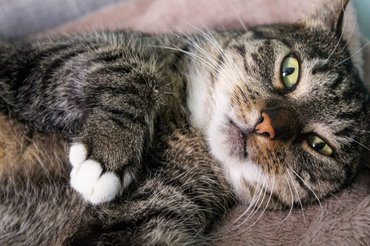
Meanwhile, wild populations may take an entirely different path: natural selection could enhance wildcat-like traits that allow them to survive independently. Biologists believe that the cat’s basic body plan is so effective that major physical changes are unlikely — but their behavior may continue to adapt and evolve in response to their environment.
Follow us!
facebook instagram
Related articles