


These Were the Most Popular Medieval Cat Names
Published: 2026. 05. 10. 07:30 -
- Photos: Getty Images Hungary, The opening image is AI generated. • 3 minutes readingPublished: 2026. 05. 10. 07:30 -
- Photos: Getty Images Hungary, The opening image is AI generated. • 3 minutes reading
Although in the Middle Ages animals were generally kept for specific practical purposes – such as hunting or catching mice – many surviving accounts suggest that they were often genuinely loved and cherished, not merely valued for their usefulness. So it is not at all far-fetched to refer to them as pets.

In her book Medieval Pets, Kathleen Walker-Meikle notes that people sometimes used generic names for all animals of a given species. This means that the extensive lists of medieval animal names often found on websites and in social media posts are not necessarily historically accurate. A significant portion of modern internet lists is not based on historical research but rather on compilations created for entertainment purposes. These often fail to cite specific sources, manuscripts, or precise dating. Many of these catchy names were invented based on just a handful of documented examples, often supplemented with Early Modern names to flesh out the lists. This does not mean these creative names are not charming or interesting, but they should be treated with some caution if historical authenticity matters to us.
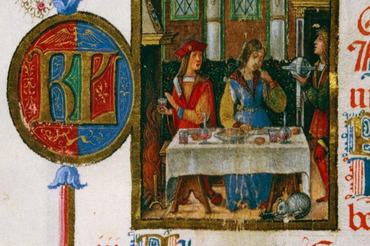
Kathleen Walker-Meikle writes in her book:
"In English the generic name for a tomcat was Gyb (the shortened form of the male name Gilbert), and was a popular name for individual pet cats. Its earliest use is on a late fourteenth-century seal of one Gilbert Stone which depicts a cat with a mouse and the legend ‘gret: wel: gibbe: oure: cat’. The cat who eats Jane Scrope’s sparrow Philip in Skelton’s poem is called Gyb. There is ‘gib our cat’ in the early sixteenth-century play Gammer Gurton’s Needle."
Records also preserve examples of other individual cat names. There was Mite, who wandered around Beaulieu Abbey in the 13th century, and Belaud, a gray cat owned by Joachim du Bellay in the 16th century. The famous ruler Isabella d'Este had a cat named Martino. One of the best-known medieval cats is Muezza, said to have belonged to Muhammad, who was often said to sleep on his prayer robe.
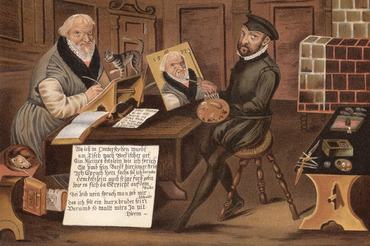
Old Irish legal texts also mention several cats by name: Meone (“little meow”), Cruibne (“little paws”), Breone (“little flame”), and Glas nenta (“nettle-gray”). In addition, a 9th-century Irish poem survives describing the relationship between a monk and his cat. The cat’s name is Pangur Bán, meaning “pure white.” The full poem, along with its translation and historical context, can be found online.
We recently came across a very charming video on Instagram featuring medieval cat names, their meanings, and their origins. Several of the names mentioned are ones already listed above, though some may not be based on genuine historical records and may not be entirely authentic. Still, the short video is well worth watching for its delightful examples of medieval cat illustrations.
Follow us!
facebook instagram
Related articles
Why Purring Can Turn Into an Attack in a Split Second?
Life • 3 minutes
10 Things Cats Really Hate
Life • 4 minutes
You’ve Never Seen Cats With Patterns This Strange! (Video)
Life • 3 minutes