Lynxes Caught on Camera Soaking Their Prey
Published: 2026. 05. 23. 07:30 -
- Photos: Getty Images Hungary, Rafael Finat • 4 minutes readingPublished: 2026. 05. 23. 07:30 -
- Photos: Getty Images Hungary, Rafael Finat • 4 minutes reading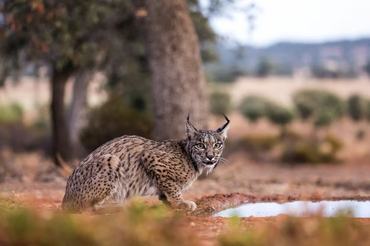
 Set WeloveCatz to appear first in Google search results!
Prey-soaking behavior has never before been documented in predators—not even anything remotely similar. What’s more, this discovery casts the species in an entirely new light.

Here’s what the wildlife ecology and game management research team at the Instituto de Investigación en Recursos Cinegéticos thinks about lynxes that soak their prey in water.
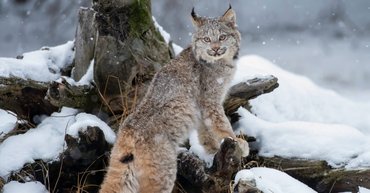
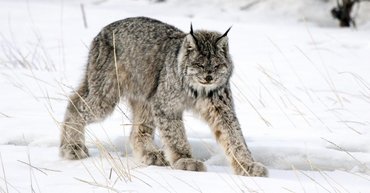
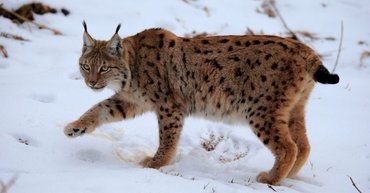
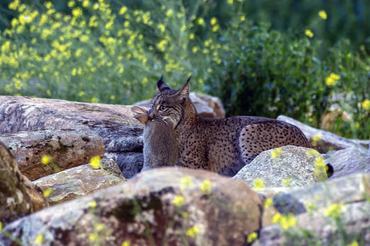
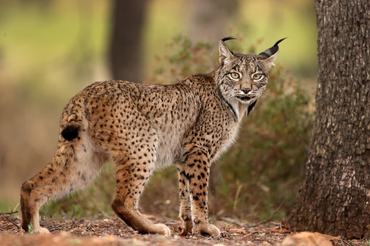
The Iberian lynx (Lynx pardinus) is a medium-sized predator native to the Iberian Peninsula. Once widespread, its population declined dramatically during the 20th century, reaching a critical state with fewer than 200 individuals remaining in the wild. As a result, it became the focus of numerous conservation programs, including both in-situ and captive breeding efforts, followed by reintroduction into the wild.
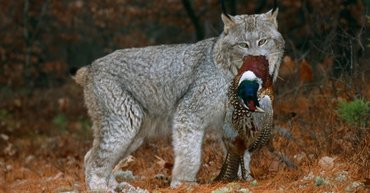
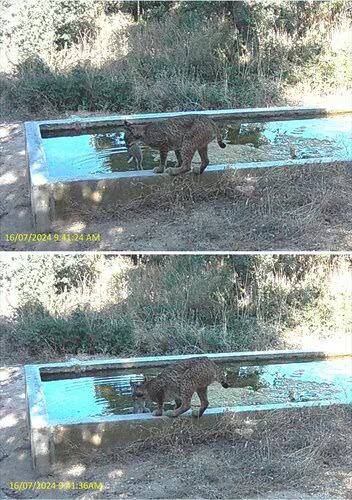
Among footage recorded by camera traps placed in the Toledo Mountains between 2020 and 2025, researchers captured several truly remarkable moments showing a previously unknown aspect of Iberian lynx behavioral ecology—one that points to impressive intelligence and adaptability. Female lynxes were seen soaking their prey in water, a behavior that may have several possible explanations but, regardless, fundamentally challenges existing assumptions about how felines handle their kills.
Until now, science has generally viewed predators as animals that either consume their prey immediately after the kill or hide it from competitors to return to later. However, there has never been any documented case of a species intentionally altering its food using water.
The first event was recorded on August 9, 2020, when a female named Naia carried a freshly killed rabbit to a watering trough. Since then, researchers have documented eight similar cases involving five different females at five separate watering sites. The clearest footage shows lynxes holding rabbits underwater for at least 60 seconds without letting go, before leaving with the soaked prey. Particularly intriguing is the fact that this behavior appears to be strictly local: it has not been observed in any other Iberian lynx populations across the peninsula, nor in continuously monitored breeding centers. Researchers also note that the behavior does not appear to be directly triggered by extreme heat waves, suggesting a deeper underlying reason.
As reported by Smithsonian Magazine, food-soaking or washing has previously been observed in other animal species. In raccoons, for example, water increases the sensitivity of their paws, helping them assess food texture and determine whether it is safe to eat. Food washing has also been observed in non-human primates such as orangutans and macaques, as well as wild boars, primarily to remove sand or debris. Even some birds, such as the Goffin’s cockatoo, occasionally soak food to soften it. However, these are omnivorous or frugivorous species rather than predators, and such behavior has most often been documented in captivity.
To better understand the phenomenon, researchers conducted controlled experiments using rabbit carcasses. The results showed that submerging the carcass not only accelerates cooling but that the rabbit’s fur also acts like a sponge, retaining substantial moisture even 40 minutes after immersion. Although further research is needed, scientists believe female lynxes may be using this method to deliver water to their cubs. This theory is supported by the fact that all observed cases occurred during the hottest months of the year. Hydration is especially critical during the weaning period, when cubs transition from mother’s milk to solid food.
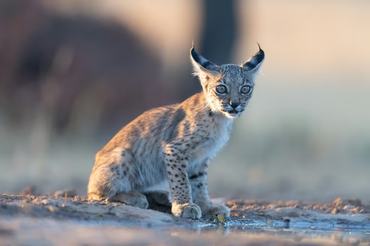
Another important question is whether this behavior is learned. Until now, lynxes have largely been considered solitary predators. Yet the existence of this habit may suggest they possess a far more sophisticated social structure than previously assumed—one advanced enough to allow for knowledge transmission. Notably, the females exhibiting this behavior are often related or occupy neighboring territories.
It is likely that one pioneering female discovered the benefits of soaking prey, and that others—particularly her daughters—learned the technique through observation. This kind of behavioral flexibility is rarely documented in wild felids and points to significant cognitive sophistication.
Follow us!
facebook instagram
Related articles
7 Reasons Why Cats Arch Their Backs
Life • 4 minutes
How to cut your cat's claws safely
Care • 3 minutes