You Have Never Seen Such A Grumpy Cat! Breathtaking Footage From The Eastern Himalayas
Published: 2025. 10. 06. 07:30 -
- Photos: Getty Images Hungary • 3 minutes readingPublished: 2025. 10. 06. 07:30 -
- Photos: Getty Images Hungary • 3 minutes reading
 Set WeloveCatz to appear first in Google search results!
For the first time, a Pallas’s cat has been captured in a photo in the high mountains of Arunachal Pradesh state in India. The appearance of the rarely seen wildcat is further evidence that the wildlife of the Himalayas is much richer and more mysterious than previously thought.

Thanks to a camera trap, the elusive Pallas’s cat was captured for the first time at an altitude of 4,992 metres in the Indian part of the Himalayas. This species is one of the world’s least studied wildcats, and their occurrence has so far been documented only in Sikkim, Bhutan, and Eastern Nepal. The discovery not only expands the known habitat of the Pallas’s cat, but also points to the outstanding species richness of the region.
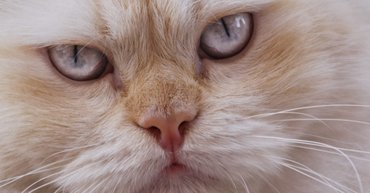
Below you can see the photo of the fluffy cat staring grumpily into the camera on the snowy landscape, which serves as proof of the species’ presence in Arunachal Pradesh state.
The Pallas’s cat (Otocolobus manul) is one of the world’s least studied wildcat species, and it is very rarely caught on camera. However, the researchers of WWF India and the staff of the Forestry Department of Arunachal Pradesh succeeded! Between July and September 2024, they set up 136 camera traps across more than 2,000 square kilometres, in 83 high-mountain, hard-to-reach locations in the districts of West Kameng and Tawang. The cameras recorded footage for eight months, often under harsh, freezing conditions, so we can say that this survey counts as one of the region’s most comprehensive wildlife research projects. The Pallas’s cat, or steppe cat, was finally captured at an altitude of 4,992 metres.
“The discovery of Pallas's Cat in Arunachal Pradesh at nearly 5,000 metres is a powerful reminder of how little we still know about life in the high Himalayas.” said Rishi Kumar Sharma, Scientific and Conservation Lead of WWF India’s Himalaya Programme.
That a landscape can support snow leopards, clouded leopards, marbled cats, and now Pallas’s cat alongside vibrant pastoral traditions speaks to its extraordinary richness and resilience.
The Pallas'a cats, or manuls, separated from the evolutionary line of leopards about 5.2 million years ago, thus they are among the most ancient representatives of the wildcat species living today. Their stocky body and dense fur provide perfect camouflage in the rocky, bushy mountain slopes. They hunt by ambush, setting out mostly at dusk to catch prey, when they capture rodents, smaller birds, and lizards. It is interesting that they cope with the merciless cold by standing on their bushy tail, insulating their paws from the frozen ground with the fur of it.
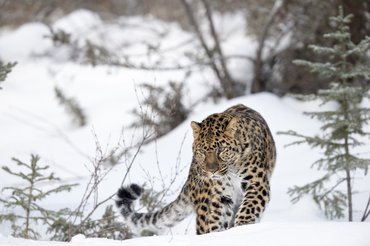
During the research, five other wildcat species also posed for the cameras: snow leopards (Panthera uncia), leopards (Panthera pardus), clouded leopards (Neofelis nebulosa), leopard cats (Prionailurus bengalensis), and marbled cats (Pardofelis marmorata). A particularly rare observation was that a snow leopard and a leopard were photographed marking scent in the same place – a perfect opportunity to see how these top predators live side by side.
Follow us!
facebook instagram
Related articles

7 Reasons Why Cats Arch Their Backs
Life • 4 minutes
How to cut your cat's claws safely
Care • 3 minutes