Caught on video: Cats really can love fruit
Published: 2025. 11. 16. 07:30 -
- Photos: Getty Images Hungary • 2 minutes readingPublished: 2025. 11. 16. 07:30 -
- Photos: Getty Images Hungary • 2 minutes reading
 Set WeloveCatz to appear first in Google search results!
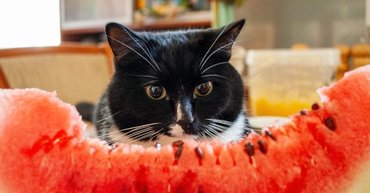
The cat’s owner in the video was initially puzzled by the strange marks on the fruit — but it didn’t take long to piece together who the culprit was and how the damage happened. The takeaway: cats can get a taste for fruit, so it’s best to store it safely out of reach!

We’ve published several articles about which seasonal vegetables and fruits cats can safely consume. In all of our feeding-related content, however, we emphasize that our purring companions are obligate carnivores — meaning they can obtain all essential nutrients from an exclusively animal-based diet and do not need any other type of food. So how does this make sense?
The apparent contradiction is actually easy to resolve: while cats do require animal-based nutrition, that doesn’t mean they’ll never sample plants — sometimes out of curiosity, sometimes because they like the taste, or even because their stomach hurts. This behavior is especially common among domesticated indoor cats, whose restricted environment can trigger unusual habits such as knocking food off tables, stealing bites, or nibbling on unexpected items. A great example is the video below, which shows a cat “attacking” a pear.
As you can see, the cat wasn’t driven by hunger — it was more about play and boredom. The poor pear ended up full of holes, but not eaten. Still, cats do sometimes consume their “prey,” which is why it’s important to ensure they can only reach foods that are safe for them.
Fortunately, pears are not toxic to cats, so even if this one had taken a bite, there wouldn’t have been a problem. The peel or seeds, however, could cause mild digestive issues (and in very large quantities, the seeds’ cyanide content can be toxic — though the amount in a single pear’s core is far below the danger level).

Since cats don’t always know what’s harmful to them, it’s up to you as the owner to keep watch. Never leave out foods containing cocoa, alcohol, or caffeine, and keep your cat away from onions, birch sugar (xylitol), grapes, and raisins.
Raw meat and bones should also be kept out of reach — in fact, it’s best to dispose of bones in an outdoor bin immediately, so your cat doesn’t go “dumpster diving” for them later.
Follow us!
facebook instagram
Related articles




7 Reasons Why Cats Arch Their Backs
Life • 4 minutes
How to cut your cat's claws safely
Care • 3 minutes