


Why Do Cats Meow When We Feed Them?
Published: 2026. 02. 08. 07:30 -
- Photos: Getty Images Hungary, welovcecatz.hu • 3 minutes readingPublished: 2026. 02. 08. 07:30 -
- Photos: Getty Images Hungary, welovcecatz.hu • 3 minutes reading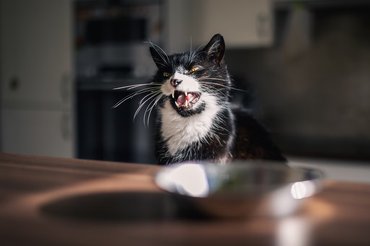
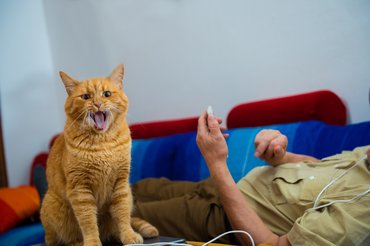
My cat Cirmi is a typical example of this phenomenon. Cirmi doesn’t signal hunger by meowing; instead, she resorts to quieter—though no less forceful—tactics. However, the moment she is sure that we understand each other and that she is indeed about to be fed, she bursts into loud meowing, which she doesn’t stop until her bowl is placed in front of her. Interestingly, in the same household our cat Culu, who was with us until 2024, was not this vocal, nor does Paszti, the newcomer, behave the same way as Cirmi. We haven’t yet figured out why Cirmi is so loud, but below we list a few possible reasons that may explain this characteristic feline behavior.

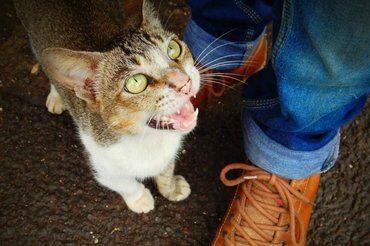
It would be understandable if they were doing this to signal that they’re hungry, yet cats often meow loudly even when only seconds separate them from getting their food. Why do they do this?
People are often somewhat puzzled when it comes to deciphering cats’ body language, as there are subtle signals we might not even notice. Cats, however, are not hindered by such communication barriers. Over thousands of years of living alongside humans, they have developed a method that effectively captures human attention: meowing.
Kittens meow at their mother to ask for care, and domestic cats have retained this trait: they primarily use it as a communication tool to get food or attention from humans,
— explains Dr. Liza Cahn, veterinarian.
Dr. Cahn adds that meowing right before feeding may mean that the cat is hungry, but it can also indicate excitement about the imminent arrival of food. It’s even possible that the cat has simply learned that vocalization results in attention—and, most importantly, tasty treats—so it will start meowing as soon as it notices the possibility of food.
Meowing is both instinctive and learned. The ability itself is instinctive and innate, but using it to obtain something specific is often learned,
— emphasizes Stephen Quandt, certified cat behavior specialist.
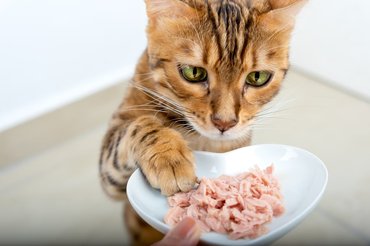
Loud meowing before meals is usually just a harmless habit, but sometimes it can be a warning sign. For example, it may indicate dental problems if a cat meows very loudly for food, then barely eats once the bowl is put down and walks away from it. As mentioned earlier, loud pre-meal meowing can signal hunger, but cats may also feel hungry when they are not receiving the nutrients they need. This isn’t only related to food quality; on the one hand, their age determines what nutrients they require, and on the other hand, certain illnesses can affect nutrient absorption. In such cases, no matter how much food the cat gets, it will always feel hungry—yet significant weight gain will not occur, even with increased food intake.
Certain diseases, such as diabetes and hyperthyroidism, make [cats] feel chronically undernourished, because these conditions disrupt normal nutrient absorption,
— explains Dr. Geri Katz, veterinarian.
We can’t determine the cause of unusual behavior at home, so if we suspect that pre-meal vocalization may have a medical reason, we should definitely take our pet to the veterinarian.
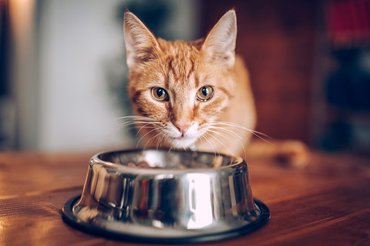
If excessive meowing before meals bothers you and you’ve made sure that your cat is not vocalizing due to a health issue, you can try to discourage the habit—for example, by feeding smaller portions more frequently—although it’s important to note that not every cat can be successfully dissuaded from this behavior.
Although it may be unavoidable in some cases, sticking to set feeding times, using automatic feeders, interactive feeding toys, and trying to wait with feeding until the cat is calm and quiet can be helpful,
— explains Dr. Cahn.
It’s also worth reconsidering whether your cat’s basic needs—such as sufficient quantity and quality of food, or playtime—are being met. If food is your cat’s only form of entertainment, it’s very likely to become overly excited about it, making meowing almost inevitable. More regular shared playtime can not only help reduce excessive meowing and minimize pre-meal vocalization, but can also strengthen the bond between cat and owner.
If we really want to—and if it makes it more bearable—we can even interpret pre-meal meowing as a form of gratitude. Though we might just be fooling ourselves, no harm comes of it, as long as we keep the possibility of health issues in mind.
Follow us!
facebook instagram
Related articles