5 Dangers That Lurk for Cats Left Alone at Home – How to Prevent Trouble
Published: 2026. 02. 15. 07:30 -
- Photos: Getty Images Hungary • 4 minutes readingPublished: 2026. 02. 15. 07:30 -
- Photos: Getty Images Hungary • 4 minutes reading
 Set WeloveCatz to appear first in Google search results!
For indoor cats, spending time at home can mean both safety and danger. We know how curious, agile, and incredibly resourceful our feline companions are when it comes to finding the most unexpected “treasures” around the house—but this curiosity can sometimes get them into serious trouble.

A household is full of hidden hazards that can cause severe injuries or poisoning. Let’s take a look at the 5 most common dangers for cats indoors—and how you can protect your pet from them.
Cats are often interested in what’s on our plate, but many human foods are not only unhealthy for them, they’re downright toxic. Certain vegetables and fruits—such as onions, garlic, raisins, or chocolate—can cause serious poisoning even in small amounts. That means a breakfast or snack left on the table or kitchen counter can pose a real danger to your cat.
We know mornings are rushed, but never leave food scraps on the table or in the kitchen where your cat can reach them. Prepare your breakfast or packed lunch on a tray that you can quickly put back into the fridge. In this article, we’ve compiled a list of 9 foods that can be fatal for cats.

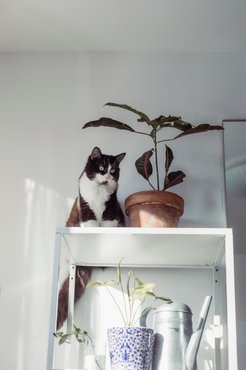
Potted plants and cut flowers can brighten up your home, but not all of them are safe for cats. Many plants—such as lilies, daffodils, and other popular spring flowers—can cause poisoning even through pollen or sap in the vase water if a cat tastes or touches them.
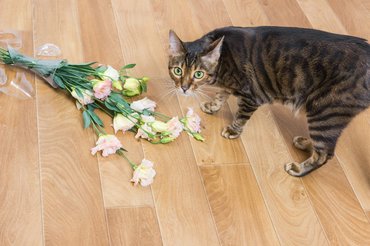
Cut flowers pose another risk as well: a cat can easily knock them over along with the vase, and broken glass can seriously injure your little troublemaker.
There are plenty of cat-safe plants you can choose for home decoration. It’s also important to use sturdy pots and vases that are hard to knock over—especially if your cat is often home alone.
Long, dangling charging and electrical cables look like moving toys to cats. If they bite into them, they can injure their teeth or suffer electric shock or burns. Cables can be dangerous even when unplugged: due to their copper content, they can be toxic if chewed.
Put chargers away, or consider switching to wireless options long-term. Hiding cables can be tricky, but if you can’t conceal them completely, use cable protectors or hidden cable channels.

Many people don’t realize just how many household chemicals and fragrances are toxic to cats. Almost all cleaning products, popular essential oils, laundry pods, and cosmetic products can cause severe poisoning if a cat gains access to them.
Common ingredients such as ammonia and chlorine can severely irritate a cat’s airways, eyes, and skin, while phenols are especially dangerous because a cat’s body cannot break them down effectively. Isopropyl alcohol is toxic if ingested. These substances can also get onto your cat’s paws from surfaces and enter their body during grooming, which is why proper storage and thorough ventilation are absolutely essential. It’s also worth noting that synthetic fragrances can be harmful to humans in the long run as well.
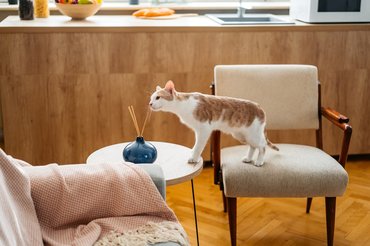
Always store chemicals, detergents, fabric softeners, and cosmetics out of your cat’s reach, and even within closed cabinets, keep them in the least accessible places. You can use eco-friendly cleaning products, which can be easier on both the environment and your wallet—but these should also be stored safely. Try to avoid using essential oils altogether. If you insist on diffusing them or using them for laundry or cleaning, consult your veterinarian to find out which ones are completely safe for your pet.
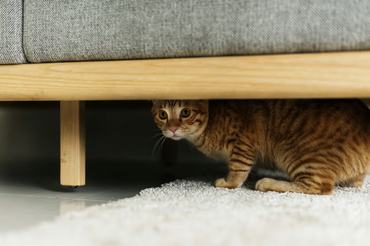
Drainpipes, vents, radiator gaps, windows left improperly closed after airing out the room, and self-closing doors can all pose dangers to an adventurous cat while you’re away. For cats, nothing is impossible: the author’s own cat once discovered a “superpower” that allowed it to run up the wallpaper all the way to the top of the tallest cabinet…
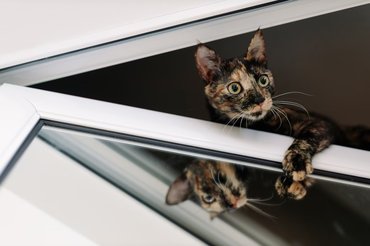
In addition to checking that all windows are closed before leaving, it helps to regularly walk through your home and scan it from a cat’s point of view. It may sound strange at first, but caution pays off. Just because your cat hasn’t tried to squeeze into a dangerous space for a month doesn’t mean it wńon’t try tomorrow. Prevention is always better than dealing with an accident afterward.
Follow us!
facebook instagram
Related articles



7 Reasons Why Cats Arch Their Backs
Life • 4 minutes
How to cut your cat's claws safely
Care • 3 minutes