A new study has revealed what can help cats live longer
Published: 2026. 03. 23. 07:30 -
- Photos: Getty Images Hungary • 3 minutes readingPublished: 2026. 03. 23. 07:30 -
- Photos: Getty Images Hungary • 3 minutes reading
 Set WeloveCatz to appear first in Google search results!
Losing a beloved cat is a real tragedy, one that often occurs prematurely even in domestic households, and for many cats the cause is traffic accidents.

A review by researchers at Murdoch University found, among other things, that the most common cause of death among free-roaming cats is road accidents. If you’re not yet convinced about keeping cats indoors, please read on—by the end of this article, you will likely see the issue differently.
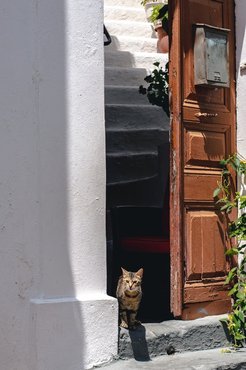
In a recent research review examining numerous studies, it was found that keeping cats indoors continuously is not only beneficial for wildlife, but also much safer for the cats themselves.
In one American study of 55 free-roaming cats:
This kind of risk-taking is not unique to American cats. When cameras were attached to 37 cats in New Zealand:
Australian cats are no exception either: in one study, 428 radio-tracked cats crossed roads an average of 4.8 times per day.

If you love The Simpsons, you may remember what the family’s cats were called—and perhaps what happened to them. Snowball I and Snowball II died on the road, Snowball III drowned, and Coltrane (also known as Snowball IV) fell to his death. Unfortunately, reality is not far from this depiction. According to the review, trauma—especially traffic accidents, fights, and falls—causes the death or injury of many free-roaming cats.
A recent British study found that traffic accidents are the leading cause of death in cats aged 1 to 8 years. This aligns with European estimates, which suggest that 18–24% of cats are hit by cars during their lifetime, and about 70% of these incidents are fatal. The victims are often under 5 years old and predominantly male. The risk is higher in unneutered animals, as they roam larger territories and more frequently, especially during mating periods.

Free-roaming domestic cats are exposed to serious infectious diseases, such as Feline Immunodeficiency Virus. These infections are most commonly transmitted during fights between cats.
Although it is difficult to quantify intentional acts of cruelty against cats, there is global evidence of deliberate poisoning, trapping, and shooting. Researchers estimate that outdoor or free-roaming pet cats live at least 2–3 years less than indoor cats.

According to Hungarian animal welfare law, pet owners are required to ensure proper and safe housing, professional care, and the prevention of escape. This effectively means that keeping cats within the property is also a requirement. Of course, we know that this is not the reality in many parts of the world. Still, it is very important that every cat owner does everything possible to enable indoor living. It is the simplest and most effective way to protect cats—and not least, the environment and the animals living in it.
It is important to emphasize that indoor living does not necessarily mean a cat must be confined inside at all times. For example, you can create a secured outdoor space on a terrace using cat netting, or even train your cat to walk on a leash. While these techniques may seem excessive to some, it must be noted that anyone who chooses to keep a pet voluntarily assumes significant responsibility. Looking at the broader picture, we are also responsible for domesticated species as a whole—which includes not only protecting the animals themselves, but also safeguarding the environment.
Follow us!
facebook instagram
Related articles


7 Reasons Why Cats Arch Their Backs
Life • 4 minutes
How to cut your cat's claws safely
Care • 3 minutes