Why does a cat sleep face down?
Published: 2026. 03. 28. 07:30 -
- Photos: Getty Images Hungary • 3 minutes readingPublished: 2026. 03. 28. 07:30 -
- Photos: Getty Images Hungary • 3 minutes reading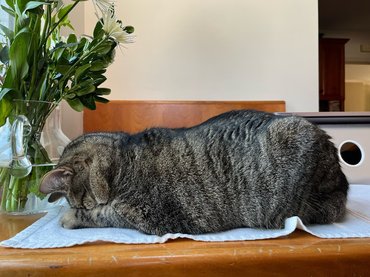
 Set WeloveCatz to appear first in Google search results!
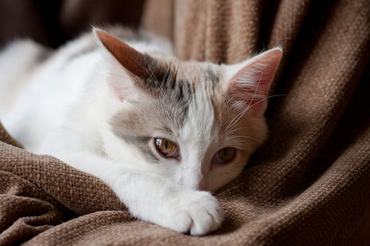
Cats sometimes sleep in places and positions that seem almost impossible or uncomfortable to us. You may have seen your own cat lying on its belly with its face turned downward, not even to the side. At first glance, it might seem worrying: can it even breathe?

All three of our cats slept in this position after being neutered, which we assumed was because they were still groggy from anesthesia and simply drifted off like that. Later, however, we noticed that other cats sleep this way too—some even regularly. Here’s why a cat might sleep face down.
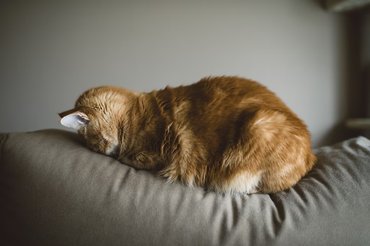
The most likely reason for this strange position is simply that it’s comfortable for the cat. Covering the face can also help retain warmth, so this posture may be more common during cooler months. Although there’s no scientific explanation for this behavior, in our opinion, it may also help block out daylight during sleep—which is quite useful, since cats can’t exactly draw the blackout curtains. In young cats, this position can be especially common when they’ve exhausted themselves with play or food and don’t even have the energy left to settle into a “normal” sleeping position.
Many people wonder whether a cat can breathe like this. Yes—it can. If it couldn’t, it would most likely choose a different sleeping position. So there’s no need to worry, but if you’re still uneasy, you can gently wake your cat and encourage it to change position. It’s worth noting, however, that cats sleep a lot but lightly; their instincts tell them to remain ready for potential threats, so it’s not ideal to frequently disturb and interrupt even these short sleep cycles.
That said, a cat that sleeps like this most likely feels completely safe in its environment, as in this position it cannot see its surroundings and its sense of smell is somewhat limited.
There is a big difference between a cat sleeping face down on a presumably soft surface and pressing or pushing its head against hard surfaces. While the former is generally normal behavior, the latter can indicate a serious underlying condition.
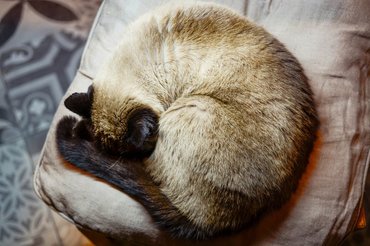
For example, hepatic encephalopathy can lead to a buildup of ammonia in the body because the liver is not functioning properly and cannot eliminate it. Ammonia can also accumulate in the brain, causing pressure, headaches, and confusion. Neurological diseases—such as brain tumors or infections affecting the nervous system—can also cause this behavior. Other possible causes include head injuries, abnormal electrolyte levels in the blood, or exposure to toxic substances.
Pressing the head against hard surfaces often appears suddenly, whereas sleeping face down is usually a habitual behavior observed from a young age. If a cat suddenly starts pressing its head against solid objects, it should definitely be taken to a veterinarian. Even if you’re unsure, it’s best to seek veterinary advice.
As noted by the Catster website, if your cat suddenly begins to sleep or rest face down and this is not a usual position for it, it may indicate that it is unwell or in pain. If this is accompanied by lethargy, reluctance to move, reduced appetite, weakness, or any behavioral changes, it is also important to consult a veterinarian.
Follow us!
facebook instagram
Related articles
7 Reasons Why Cats Arch Their Backs
Life • 4 minutes
How to cut your cat's claws safely
Care • 3 minutes